
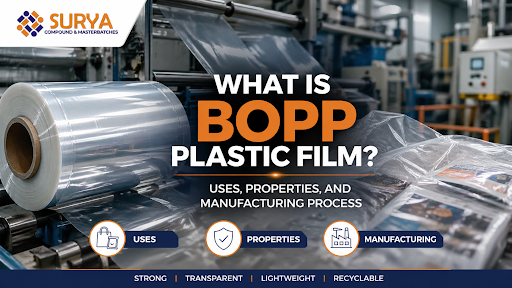
When we look at a sleek, high-gloss snack bag or the crystal-clear wrap on a new book, we are likely looking at the marvel of modern polymer science: BOPP plastic film. Standing for Biaxially Oriented Polypropylene film, it has become the gold standard in the global packaging industry.
But what exactly makes it so special, and how does a simple plastic resin transform into such a versatile material? Let’s dive into the world of BOPP film, its unique properties, and the intricate manufacturing journey that brings it to life.
What is BOPP Plastic Film?
At its core, BOPP film is a variant of polypropylene. The “Biaxially Oriented” part is the secret sauce—it means the film has been stretched in two different directions (machine direction and transverse direction) during production.
This stretching process rearranges the molecular structure, turning a standard plastic sheet into a high-performance material that is stronger, clearer, and more durable. It is a thermoplastic polymer that is rugged, resilient, and surprisingly eco-friendly because it is often recyclable and requires less energy to produce than many alternatives.
The Standout BOPP Film Properties
Why do manufacturers and consumers alike prefer Biaxially Oriented Polypropylene film? It comes down to a specific set of physical and chemical advantages:
- Exceptional Clarity: It offers a high-gloss, transparent finish that makes products look premium on the shelf.
- Moisture Resistance: It acts as a powerful barrier against water vapor, keeping food fresh and dry.
- High Tensile Strength: Because it is stretched twice, it is incredibly tough to tear or puncture.
- Chemical Stability: It remains stable when in contact with oils, greases, and various chemicals.
- Excellent Printability: Its surface is perfect for high-quality graphics, which is why it’s the top choice for branding and labeling.
Common BOPP Film Uses
You encounter BOPP plastic film dozens of times a day, even if you don’t realize it. Its versatility allows it to serve multiple industries:
- Food Packaging: From potato chip bags and biscuit wrappers to dried fruit pouches and candy wraps.
- Labeling: High-end pressure-sensitive labels for beverages, shampoos, and household cleaners.
- Adhesive Tapes: Most clear shipping and stationery tapes are made from a BOPP base.
- Lamination: It is used to laminate book covers, brochures, and posters to add a protective, glossy layer.
- Textiles: Wrapping for garments and hosiery to prevent snagging and moisture damage.
ALSO READ: PVC Compound Manufacturing Process
The BOPP Film Manufacturing Process
The transformation from raw resin to a finished roll of film is a high-tech ballet of heat, tension, and precision. Here is the step-by-step BOPP film manufacturing process:
1. Raw Material Preparation
The process starts with polypropylene resin pellets. To achieve specific colors or functional traits (like UV resistance or anti-static properties), manufacturers add specialized additives. This is where Surya compounds & masterbatches play a vital role, providing the high-quality color and additive “engines” that power the film’s performance.
2. Extrusion
The resin and masterbatches are fed into a large extruder. Under high heat (usually between 200°C and 230°C), the plastic melts into a thick, molten liquid. This liquid is forced through a flat die to form a thick sheet, or “thick foil.”
3. Quenching (Cooling)
The molten sheet is immediately cast onto a chilled roller and immersed in a water bath. This “quenches” the plastic, solidifying it quickly to ensure it remains clear and doesn’t become cloudy or brittle.
4. Machine Direction Orientation (MDO)
Now comes the “biaxial” part. The sheet passes over a series of heated rollers that begin to spin faster and faster. This pulls the film longitudinally (the long way), stretching it up to five times its original length. This aligns the polymer chains in the direction of the machine.
5. Transverse Direction Orientation (TDO)
After the vertical stretch, the film enters a massive oven known as a “tenter frame.” Metal clips grab the edges of the film and pull it outward (the wide way) as it travels forward. This stretches the film up to nine times its original width, completing the biaxial orientation.
6. Surface Treatment & Winding
To ensure that inks and glues will stick to the slippery surface, the film undergoes a “Corona” or flame treatment. This slightly alters the surface energy of the film. Finally, the finished BOPP film is measured for thickness by lasers and wound into massive “jumbo” reels.
The Human Element in Every Role
While the machines are impressive, the quality of a BOPP plastic film is determined by the people and the chemistry behind it. A slight mismatch in the additive ratio or a lower-grade masterbatch can lead to a film that tears easily or has dull colors.
In the competitive landscape of 2026, packaging isn’t just a container; it’s a brand’s first impression. To ensure that the impression is vibrant, durable, and consistent, the choice of raw materials is paramount.
This is exactly why leading manufacturers trust the expertise of Suryamb. As a veteran in the field of Surya compounds & masterbatches, one understands the nuance of polymer science. Whether you are looking for high-opacity whites, deep blacks, or specialized additives to perfect your BOPP film, Suryamb provides the innovation and technical support needed to turn raw plastic into a valuable asset. With Suryamb, your packaging doesn’t just protect—it performs.
