

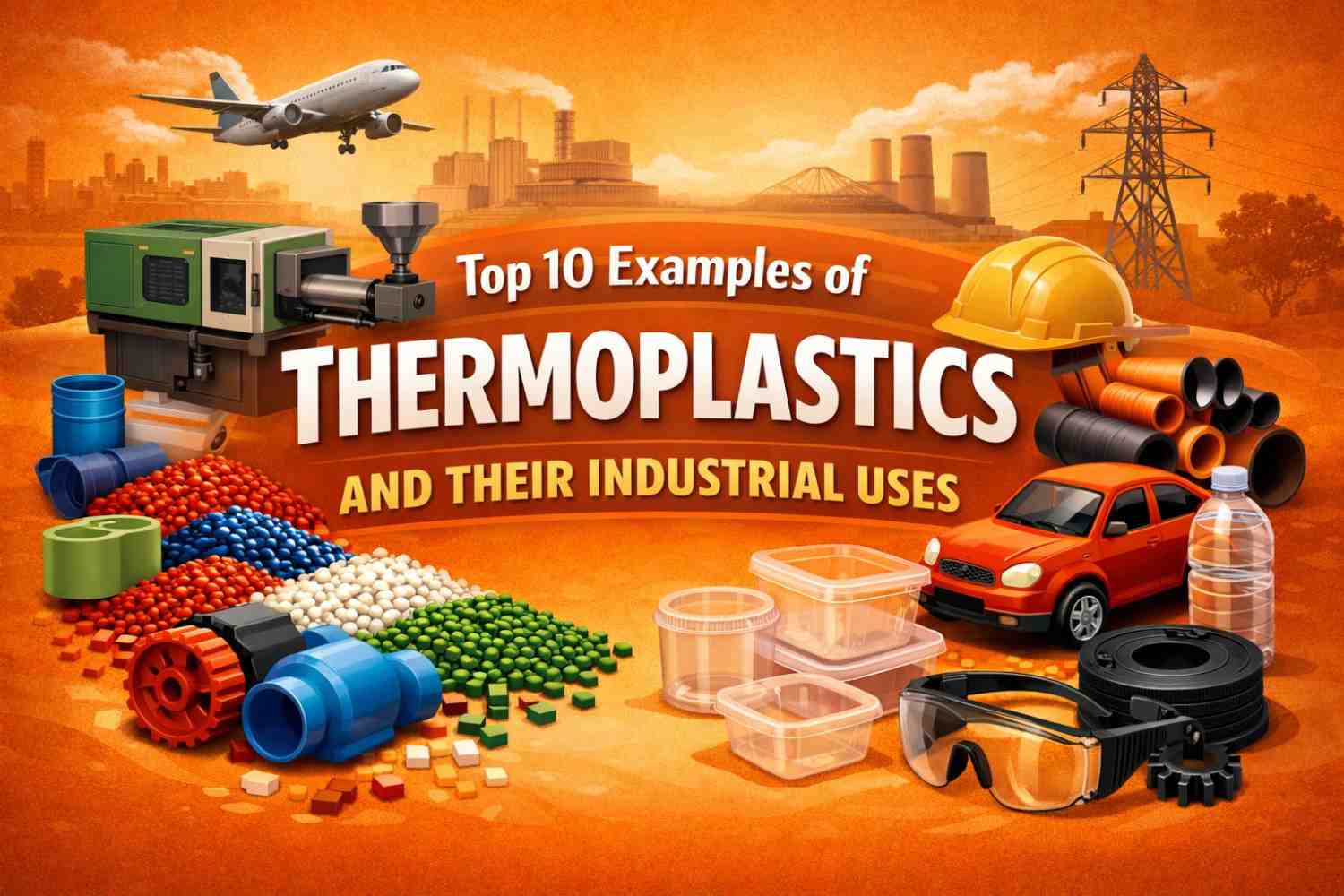
In the modern industrial landscape, selecting the right polymer is the cornerstone of manufacturing excellence. Examples of thermoplastics include widely used materials like polyethylene, polypropylene, PVC, and nylon, all valued for their ability to be melted and reshaped multiple times. These materials dominate the global market due to their versatility and recyclability. Leading the charge in providing high-performance solutions for these materials is Surya Compounds & masterbatches, offering specialized formulations that enhance the physical and aesthetic properties of various thermoplastic polymers.
Here are top 10 Examples of Thermoplastics with Uses
1. Polypropylene (PP)
Polypropylene is a semi-rigid, rugged thermoplastic used extensively in packaging, automotive parts, and textiles. It is prized for its high fatigue resistance and cost-effectiveness.
- Common Uses: Reusable containers, car bumpers, and medical syringes.
- The Surya Advantage: Surya compounds & masterbatches provide PP-specific masterbatches that enhance UV stability and heat resistance, ensuring that injection-molded products maintain their structural integrity even under harsh environmental exposure.
2. Polyethylene (PE) – HDPE & LDPE
Polyethylene is arguably the most common thermoplastic in the world. It comes in various densities, including High-Density (HDPE) for rigid structures and Low-Density (LDPE) for flexible films.
- Common Uses: Milk jugs, detergent bottles (HDPE), and plastic wraps or grocery bags (LDPE).
- The Surya Advantage: For the pipe and packaging industry, Surya compounds & masterbatches offer black and colored masterbatches with near-zero ash content, preventing mesh choking during continuous extrusion.
3. Polyvinyl Chloride (PVC)
PVC is known for its durability, chemical resistance, and inherent flame retardancy. It is a staple in the construction and electrical sectors.
- Common Uses: Electrical cable insulation, water pipes, window frames, and medical tubing.
- The Surya Advantage: As a premier manufacturer of PVC cable sheathing compounds, Surya compounds & masterbatches ensure high dielectric strength and moisture resistance, providing safety for power transmission and telecommunication cables.
4. Acrylonitrile Butadiene Styrene (ABS)
ABS is an opaque engineering thermoplastic that offers a unique combination of impact resistance and toughness.
- Common Uses: LEGO bricks, electronic housings, and automotive interior trim.
- The Surya Advantage: Using specialized color masterbatches from Surya compounds & masterbatches, manufacturers can achieve vibrant, consistent shades in ABS products while maintaining the polymer’s high-impact properties.
5. Polyethylene Terephthalate (PET)
PET is a clear, strong, and lightweight plastic that is widely used for packaging foods and beverages.
- Common Uses: Beverage bottles, polyester clothing fibers, and thermoformed trays.
- The Surya Advantage: Surya compounds & masterbatches produce PET masterbatches that maintain the polymer’s clarity while providing essential UV protection and thermal stability during high-speed bottling processes.
6. Polycarbonate (PC)
Polycarbonate is a naturally transparent amorphous thermoplastic. It is incredibly strong—often used as a glass substitute where impact resistance is critical.
- Common Uses: Eyewear lenses, bulletproof glass, and digital disks (CDs/DVDs).
- The Surya Advantage: Additive solutions from Surya compounds & masterbatches help prevent yellowing in PC materials, extending the aesthetic life of clear components.
7. Polyamide (Nylon)
Nylon is a high-performance engineering plastic known for its high melting point and exceptional wear resistance.
- Common Uses: Gears, bearings, fish nets, and car engine bay clips.
- The Surya Advantage: To meet the strict standards of the automotive and textile industries, Surya compounds & masterbatches supplies functional masterbatches that improve the dispersion and mechanical strength of Polyamide fibers and parts.
8. Thermoplastic Elastomers (TPE)
TPEs are a physical mix of polymers (usually a plastic and a rubber) that consist of materials with both thermoplastic and elastomeric properties.
- Common Uses: Soft-touch grips on tools, footwear soles, and automotive seals.
- The Surya Advantage: Surya compounds & masterbatches specializes in TPE masterbatches that deliver a superior “soft-touch” feel while enhancing abrasion resistance and elasticity.
9. Polystyrene (PS)
Polystyrene is a versatile plastic used in both solid and foamed forms. It is known for being lightweight and providing excellent insulation.
- Common Uses: Disposable cutlery, egg cartons, and protective foam packaging.
- The Surya Advantage: Surya compounds & masterbatches offer white and colored masterbatches specifically formulated for PS, ensuring uniform color distribution even in thin-walled applications.
10. Thermoplastic Rubber (TPR)
TPR compounds are low-density, dimensionally stable materials used where rubber-like properties are needed but thermoplastic processing is preferred.
- Common Uses: Refrigerator gaskets, door handle grips, and footwear.
- The Surya Advantage: The TPR compounds provided by Surya compounds & masterbatches are highly appreciated for their electrical insulation characteristics and their ability to be fully recycled.
Thermoplastic vs. Thermosetting Plastics
While thermoplastics can be remelted, thermosetting plastics (such as epoxy, phenolic, and silicone) undergo a chemical change when heated and cannot be reformed. This makes thermoplastics the preferred choice for sustainable manufacturing.
Key Differences at a Glance
|
Feature |
Thermoplastics | Thermosetting Plastics |
|
Reaction to Heat |
Softens and melts | Becomes permanently hard |
|
Recyclability |
Highly recyclable |
Non-recyclable |
| Molecular Structure | Linear/Branched chains |
Cross-linked 3D network |
| Example | PVC, PP, PET |
Epoxy, Melamine, Silicone |
Why Choose Surya Compounds & Masterbatches?
In the competitive polymer industry, the quality of the compound determines the success of the final product. Surya compounds & masterbatches stand out as a trusted partner for manufacturers due to the following:
- Customized Formulations: Tailoring masterbatches to the specific polymer base and processing method of the client.
- Advanced Dispersion Technology: Ensuring that colors and additives are spread uniformly, which prevents spotting and structural weak points.
- Industry Compliance: Providing food-grade and REACH-compliant masterbatches for sensitive applications like medical tubing and food packaging.
- Flame Retardant Solutions: Designing additives that slow the spread of fire in critical electrical and construction components.
Whether you are producing high-pressure PVC pipes, flexible TPE seals, or durable ABS housings, incorporating the right additives is vital. By utilizing the advanced technology of Surya compounds & masterbatches, manufacturers can ensure their products meet the highest global standards for durability, safety, and aesthetic appeal.
Also Read: Masterbatch Manufacturing Process
