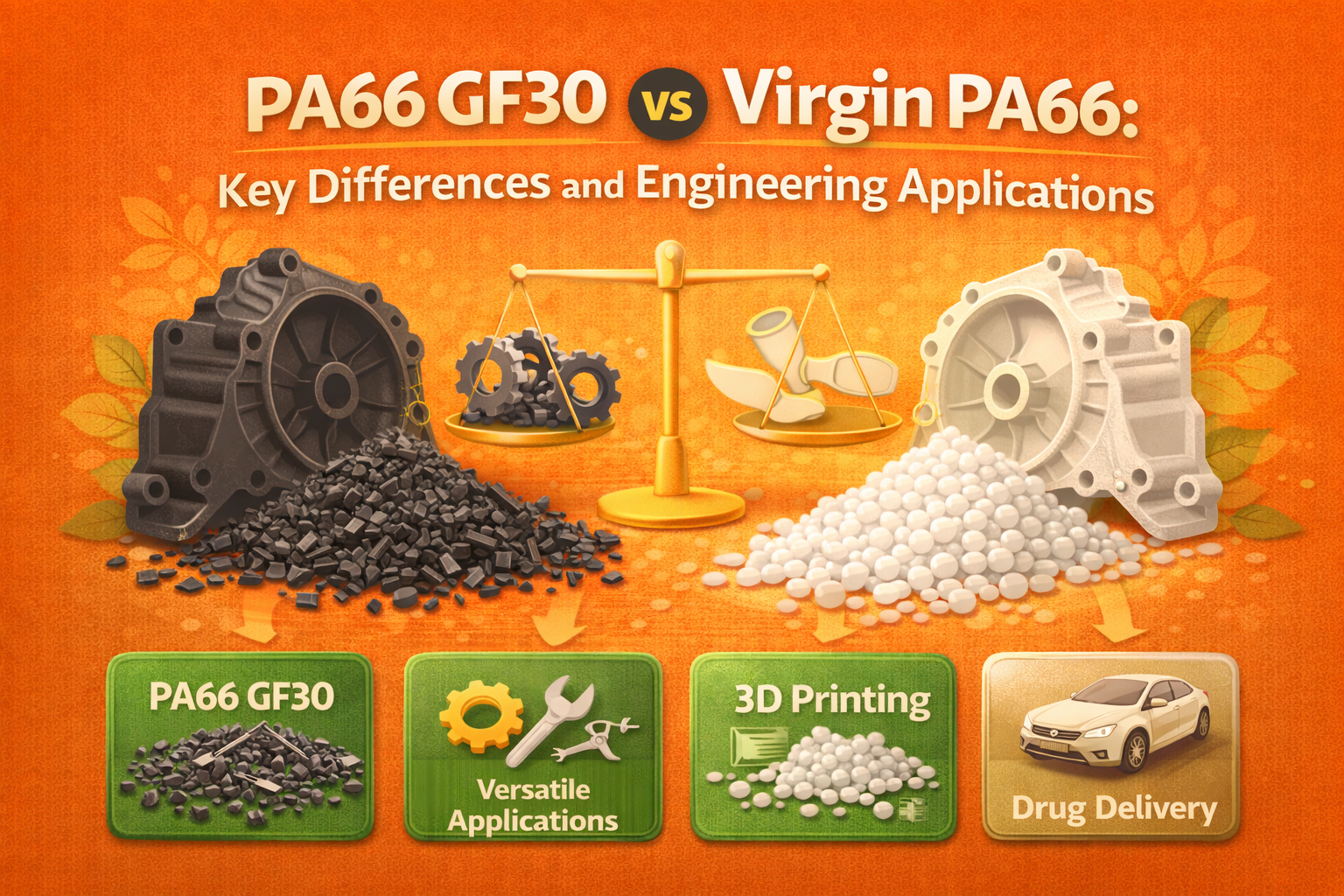
When comparing PA66 GF30 vs Virgin PA66, the differences mainly relate to strength and flexibility. Virgin PA66 provides excellent impact resistance and ductility, making it suitable for applications requiring toughness. In contrast, PA66 GF30, reinforced with 30% glass fiber, delivers higher structural rigidity, better dimensional stability, and improved performance under high temperatures. Although it is less flexible than Virgin PA66, GF30 resists moisture absorption and swelling more effectively, making it ideal for precision engineering parts that require consistent performance in demanding environments.
Material science shapes industry outcomes. That truth drives everything at Surya compounds & masterbatches. Instead of guessing, picture how structure affects performance. One material bends one way, another resists differently – details matter. Think beyond strength alone. What happens under pressure tells a deeper story. Choices shift when real-world demands enter the frame. Clarity comes from comparing more than data points. Long-term value hides in behavior, not brochures. Understanding difference means seeing function first. Decisions gain confidence through insight like this.
What Is Polyamide 66
First, getting clear on what each material means matters a lot. Not mixed, not altered – virgin PA66 stands as the raw form straight after creation. This version holds zero extras like fillers or reused bits. Think of it as nylon 66 in its starting shape, nothing added, nothing taken away.
Yet strength emerges when glass fibers enter the mix – seventy percent pure PA66 resin shaped by thirty percent glass by weight. Suddenly, the substance shifts, its molecular frame now built to bear loads. This comparison of virgin PA66 and PA66 GF30 is fundamental to modern engineering.
1. Virgin PA66 Characteristics
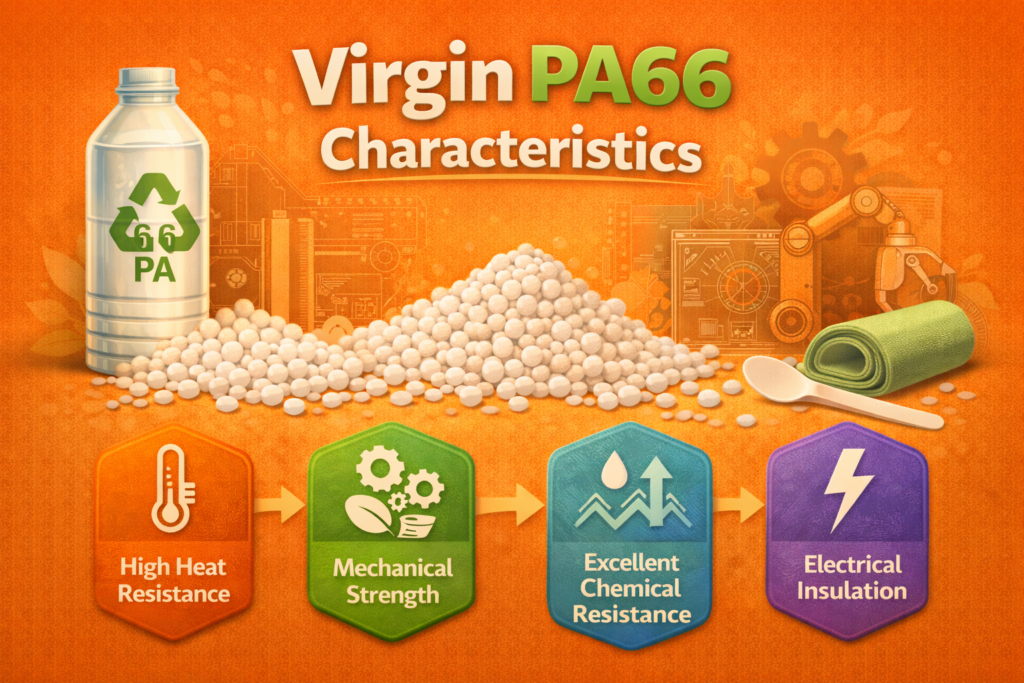
Fresh plastic gets its traits from how the molecules line up in tight groups. This stuff bends more easily than it snaps, making it strong in a flexible way. Virgin PA66 characteristics are ideal for parts requiring high impact absorption.
- High Strength and Flexibility: When hit hard, Nylon 66 bends instead of breaking – unlike stiffer plastic blends. Energy gets soaked up slowly, stretching the material first. That stretch helps parts survive sudden knocks without cracking apart.
- Natural Lubricity and Wear Resistance: What makes Virgin PA66 special? It slides smoothly under pressure. Because it resists sticking, moving components last longer. Inside gears or bushings, the material acts like it’s already greased. No extra oil needed – just steady performance where motion never stops.
- Chemical Resilience: Starting off, Virgin PA66 stands up well against fuels, greases, and a range of carbon-based liquids. Because it barely reacts, it’s often chosen for parts handling gasoline or holding chemicals.
2. PA66 GF30 Properties
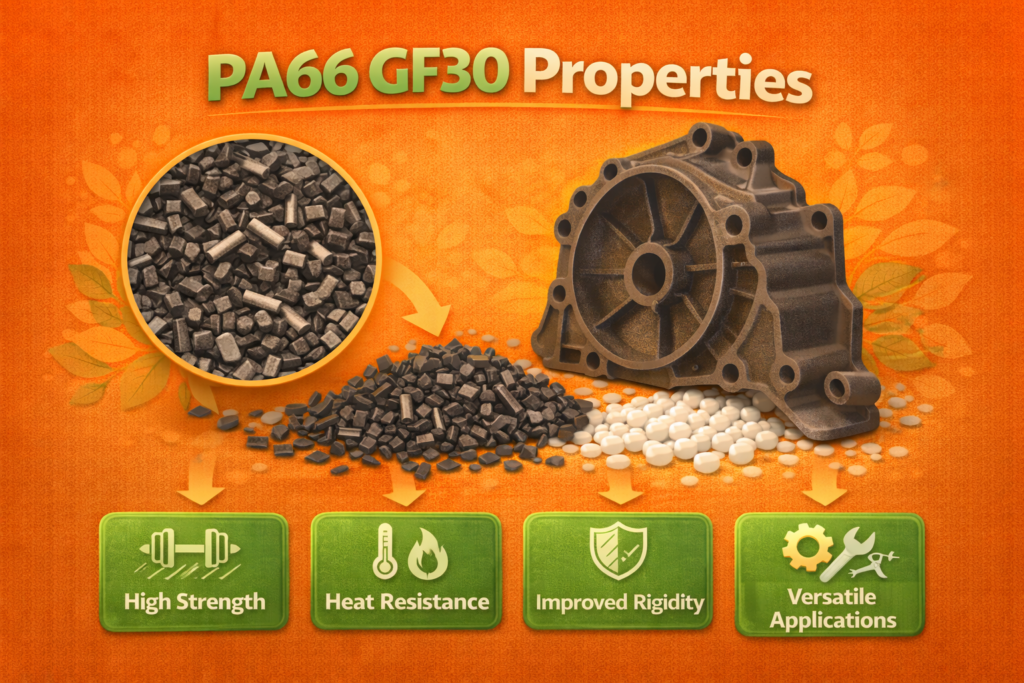
Fibers of glass, about thirty percent by weight, push PA66 into stiffer performance territory. Inside the plastic, these strands carry force like bones support a body. Understanding PA66 GF30 properties reveals why it is a preferred structural material.
- Enhanced Tensile Strength: Fiberglass-filled PA66 holds up much better when pulled compared to plain material. When force is applied, the base version tends to elongate, yet the reinforced type keeps its shape. Because of this behavior, it works well for parts like support frames and car mounting pieces.
- Stable Dimensions Minimal Creep: When held under steady pressure, some plastics slowly change shape over time. Glass fibers help reduce that effect in PA66 GF30. Because of them, it resists sagging when things get hot and heavy. Its form stays put where it should.
- Higher Heat Resistance: Starting high above room temperature, glass fibers push how hot plastic can go without bending. Instead of giving way fast like basic PA66, GF30 holds firm under serious heat. Only when things get extreme does it start to shift shape.
3. PA66 GF30 Compared With Virgin PA66
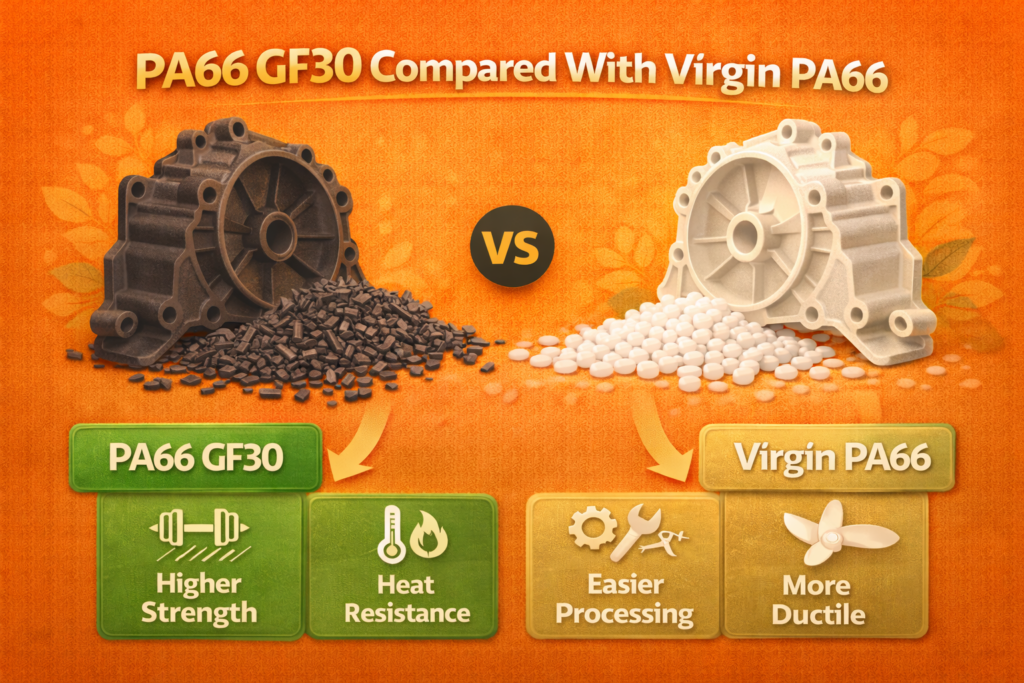
Nobody grasps PA66 GF30 vs Virgin PA66 fully without seeing them go toe-to-toe in real tests. What matters shows up clearly when they face off directly.
- Dimensional Accuracy and Shrinkage: Shrinkage usually runs higher in virgin resins. Cooling sees less contraction with PA66 GF30 – thanks to its 30% glass filler. Precision holds better in intricate components this way.
- Weight Considerations: Despite its advantages, PA66 GF30 packs more heft than pure PA66 because of embedded glass fibers. When designing parts for aircraft or vehicles where every gram counts, extra durability comes at the cost of increased weight.
4. PA66 GF30 Advantages and Drawbacks
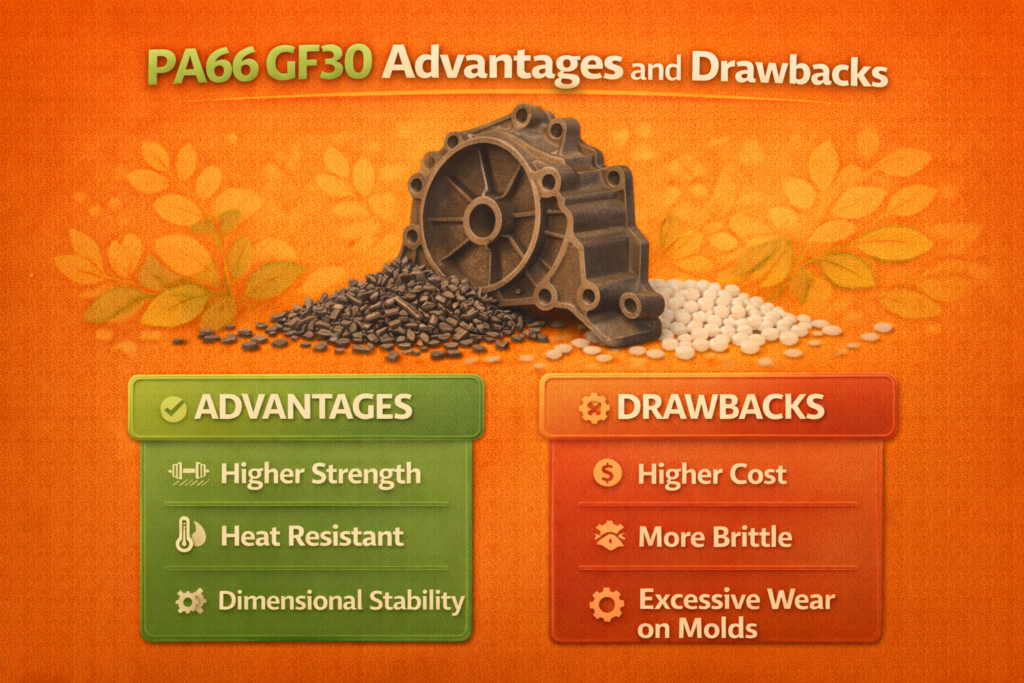
A switch to stronger materials means compromises show up, too. Take PA66 GF30 – its strengths arrive alongside certain limits. There are many Pros and cons of PA66 GF30.
The Pros (PA66 GF30 benefits)
- Firmness beyond most plastics stands out in PA66 GF30. This quality opens doors where aluminum once ruled by default. Stiffness matches expectations set by zinc castings, yet weight stays lower.
- Fatigue resistance goes up, so the material handles countless rounds of stress without breaking down. What changes is how long it lasts under constant pressure.
- Fine control outdoors when the heat tries to stretch things out. Temperature shifts matter less here. Materials hold their shape more reliably under open sky. Movement from warmth stays nearly invisible.
The Cons
- Snaps easily when hit hard, even though tougher overall. A fresh resin would just flex instead. Sudden pressure? That’s when it breaks.
- Fibers made of glass tend to grind against surfaces. When they keep rubbing, the contact slowly damages connected metal pieces even though the component stays tough.
- Fibers inside PA66 GF30 make it tough to shape. Over months, they grind down the screws and barrels used in molding machines.
5. How Industries Use Strategy
At Surya compounds & masterbatches, we see these materials applied across diverse sectors:
- Automotive Engineering: Packed with glass fibers, PA66 GF30 handles intense heat near engines without warping. Cooling fans made from it spin fast while staying intact under stress. Engine covers and intake manifolds built with it endure constant pressure pulses. Conversely, virgin PA66 shows up in wire clips and snap-together parts that need give, not rigidity.
- Electrical and Electronics: PA66 GF30 holds its shape when heated during electrical use. Stiffness matters most where current flows through enclosures. Virgin PA66 is the pick for wrapping tightly around edges and for thin insulators that rely on flexibility.
6. Processing and Aesthetics
A closer look at virgin PA66 and PA66 GF30 reveals subtle shifts in texture and appearance.
- Virgin PA66 Aesthetics: A shiny, even finish comes through when working with virgin PA66. Coloring it takes well – thanks to Surya’s masterbatches – which brings out bold, clean looks in finished pieces.
- GF30 Texture: Fiber showing up? That happens sometimes with PA66 GF30. Its look leans toward dull, not shiny. Getting that under control means using well-made blends and the right heat settings.
7. Surya Compounds and Masterbatches Function
Not only does Nylon 66 need pure resin, but it also demands precise tuning. What makes the difference? Specialized enhancements from Surya compounds & masterbatches.
- UV Stabilization: Out in the sun, virgin nylon and GF30 alike start to break down over time. To slow this change, we make additives that help them last longer outside.
- Heat Stabilizers: When things get hot, special additives keep PA66 GF30 from breaking down. Instead of falling apart, the plastic holds on – thanks to built-in protection.
- Color Consistency: A rainbow in your material choice – translucent Virgin PA66 or solid GF30 – it doesn’t matter. Batch after batch, the hue holds, thanks to our masterbatches.
8. Which One Is Right For You?
Picking one over the other? It hinges on what kind of pressure the part will face.
- When impact strength matters, go with Virgin PA66. Its ability to flex helps parts click securely during assembly. For surfaces that slide, it keeps friction low without extra coatings.
- When metal replacement is the goal, PA66 GF30 fits. High ongoing stress? This material holds up. Exposure to heat that warps other plastics won’t bend it.
Today’s factories still lean on Polyamide 66 for tough performance. With Surya compounds & masterbatches.
