

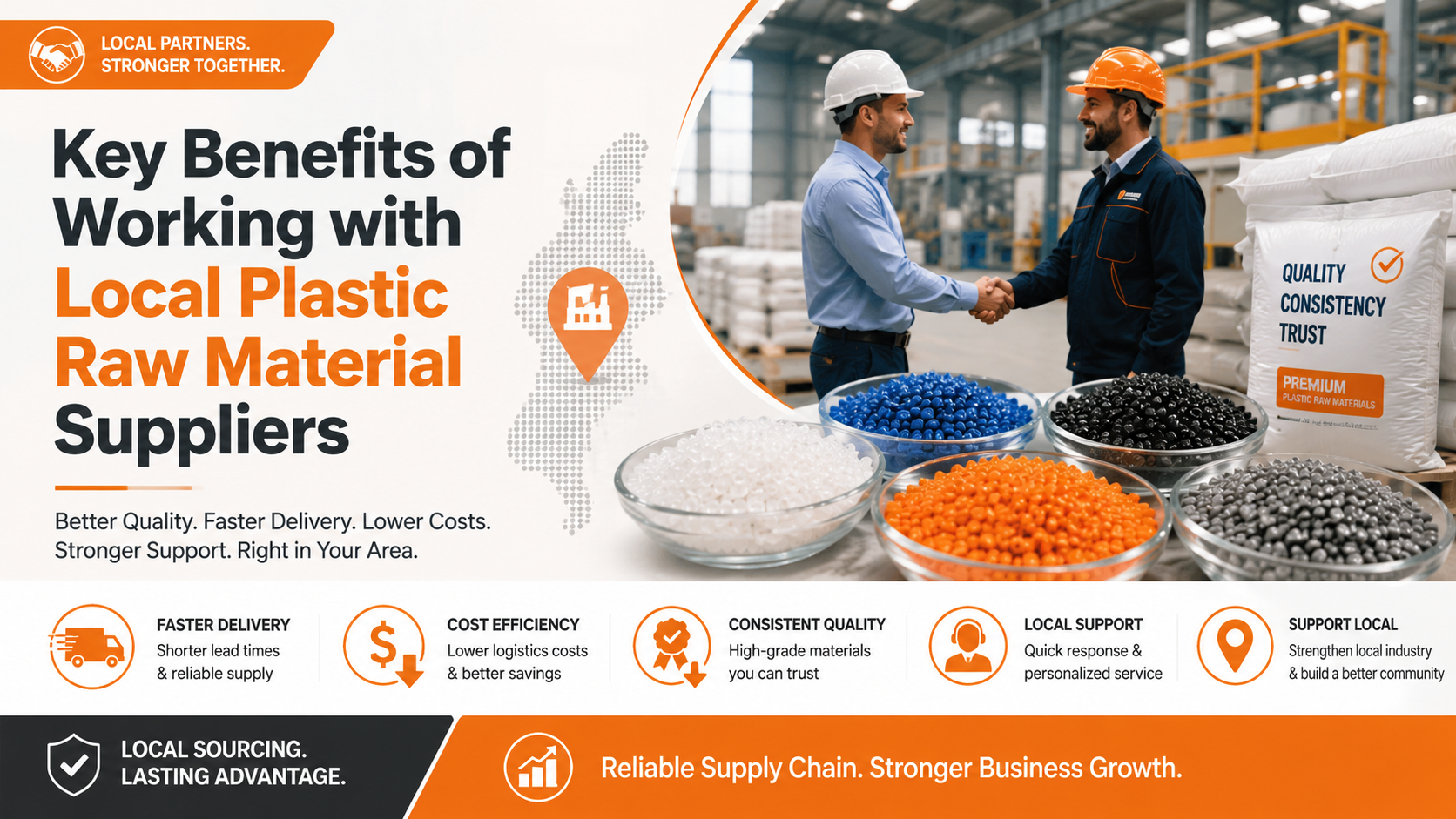
Out there among factories pumping out plastic stuff, what goes in really shapes how things run, how well items work, and then what ends up on the bottom line. Packaging rolls off the lines just like car parts, everyday objects, and heavy-duty gear, each choice tightly tied to the quality and reliability offered by trusted plastic raw material suppliers. Picking that source? It weighs more heavily than most moves a company will take.
Nowhere is the shift clearer than in how makers now choose nearby sources for plastic supplies across India. Not only do these providers cut delays, but they also build stronger links between production steps. Sometimes, closer ties mean fewer surprises when orders move fast. Often it’s the small things – like quicker replies – that make processes smoother over time. Rarely does distance help when changes happen overnight. Instead, staying regional supports steady progress without added strain. As a result, partnering with local plastic material suppliers in India has become a strategic necessity for brands aiming to maintain their competitive edge.
One reason firms stick with steady results? They team up with reliable plastic raw material suppliers. Take Suryamb – known name, solid track record. Dependability matters when picking a source for essential inputs. Many outfits find it pays off to go with seasoned makers instead of rolling the dice elsewhere.
Plastic Raw Materials Why They Matter
What goes into plastic shapes how well it performs. Better ingredients mean stronger results. The foundation matters more than most realize. Quality begins long before the final product appears. What you start with shows in the end:
- Better product durability
- Improved manufacturing efficiency
- Consistent product performance
- Reduced production defects
- Enhanced customer satisfaction
Few things matter more than what goes into making a product, so companies pay close attention to who they buy from. Suppliers shape outcomes just as much as machines or workers do.
Success often starts where trust grows between buyer and maker. A steady supply of plastic materials shapes more than production lines – it builds shared futures. Partnerships matter most when challenges arrive without warning. Long term results depend less on contracts, more on how problems get solved together. Dependable sources bring stability others cannot match.
Faster More Reliable Supply Chains
Working alongside nearby suppliers often means smoother operations. Because logistics get simpler when distances shrink. So delays drop off. Which keeps production steady. When things move faster from point A to B. It cuts down waiting time across the board. Since coordination happens more naturally. Without complex scheduling hurdles. Making adjustments becomes easier too. If problems pop up. Response times improve without extra effort. As communication flows quicker between teams. Thus momentum builds through reliability.
Shipping stuff from overseas usually takes longer. Because of border checks, things sometimes get stuck. Transportation hiccups pop up without warning. Costs shift out of nowhere. Production plans wobble when timing slips. Factories never know what to expect next.
Local Supply Chains Advantages
- Faster delivery times
- Reduced transportation delays
- Better inventory management
- Greater production flexibility
- Improved order fulfillment
When working alongside nearby plastic raw material suppliers in India, makers adjust fast to shifts in demand yet keep output flowing smoothly. A shared connection locally means changes in what people want meet quicker fixes on the floor. With materials close by, delays shrink even when orders shift suddenly. Staying aligned with regional sources supports consistent runs without surprise halts. Proximity helps sync supply with real-time needs across manufacturing lines.
Better Communication and Collaboration
When getting raw materials, clear talk matters a lot. If production needs shift fast, companies usually require quick help – maybe on specs, tech details, or changing orders. Because they’re nearby, talking to local suppliers feels easier. Stronger teamwork often grows when meetings happen face to face.
Local Partnerships Offer Mutual Benefits Through Shared Resources And Community Engagement
- Faster response times
- Easier coordination
- Improved technical support
- More effective problem-solving
- Stronger business relationships
Meeting in person or talking straight can get things sorted faster when working with local plastic material suppliers in india instead of distant ones stuck hours apart on the clock.
Consistent Product Quality
When materials change slightly, machines might struggle. Product flaws often appear if ingredients aren’t steady. Smooth production depends on stable inputs. Problems arise when what goes in keeps shifting.
Staying consistent matters most when producing plastic materials – those who do it well never let quality slip between batches. What sets solid suppliers apart is how carefully they stick to their processes each time around. Batch after batch, the outcome stays predictable because precision drives every step. It’s not just about meeting specs but doing so without fail, again and again. Dependability shows up in evenness you can count on.
Why Consistent Quality Is Important
- Stable production performance: Fewer items tossed aside when mistakes drop. Less comes back once it leaves the door.
- Improved customer satisfaction: Enhanced product reliability.
- Greater operational efficiency: Reduced downtime and lower defect rates.
When problems pop up, local suppliers tend to respond faster. Their proximity allows them to maintain consistent support more easily. Quick fixes come naturally because they are nearby. Ongoing attention to standards usually follows. Being close makes follow through simpler. Issues get resolved without long delays. Consistency in service often stays higher.
Lower Logistics Costs
Most money spent on sourcing goes toward moving goods. When materials travel far, costs climb – more so if fuel rates jump. Shipping fees shift often, adding pressure to already high bills. Working with nearby vendors might cut those expenses a lot.
| Logistics Component | Overseas / Long-Distance Sourcing | Nearby Plastic Raw Material Suppliers |
| Freight & Transport | High shipping fees; prone to fuel rate spikes. | Reduced freight expenses due to shorter distances. |
| Warehousing & Inventory | Higher storage costs to buffer against delays. | Lower warehousing and decreased inventory carrying costs. |
| Emergency Logistics | Costly expedited shipping charges when lines stall. | Fewer emergency shipping charges; fast response times. |
Profit gets a boost when costs go down, since lower expenses let makers keep prices tight without cutting into margins.
More Stable Supply Chains
Fragile links across international trade routes now face more frequent breakdowns. Shifting economies pile pressure on movement networks already strained by shipping delays. Conflicts between nations add another layer of instability. Storms, quakes, and droughts interrupt flows without warning.
Choosing nearby providers might reduce such dangers. Sometimes using regional sources cuts down on potential issues.
Key Stability Advantages
- Less need now for overseas shipping networks
- Faster recovery from disruptions
- Improved material availability
- Better inventory planning
- Increased operational resilience
When things get shaky in the market, companies focused on steady supplies tend to keep making products without pause. A reliable flow of materials helps factories stay running even when outside pressures build. Those who plan ahead for disruptions usually handle surprises better than others. Staying ready means fewer stops when demand shifts or delays hit. Smooth operations often come down to how well a maker manages its incoming parts and resources.
Easier Access To Technical Expertise
Choosing raw materials usually depends on knowing the details of how they’ll be used. With hands-on experience, suppliers offer useful perspectives – shaping better results in both production flow and end-product function. Most times help comes faster when you work with nearby vendors. A technician might even show up the same day problems start.
Technical Assistance May Include:
- Material selection recommendations
- Processing guidance
- Product customization support
- Performance optimization advice
- Troubleshooting assistance
When teams tap into nearby knowledge, choices tend to get sharper. Outcomes in production often rise as a result of that shift.
Adaptability to Unique Needs
Some fields need tough materials, yet others demand flexibility. Though packaging might prioritize lightness, cars sometimes rely on strength instead. Industrial items tend to face harsh conditions while household objects must stay user-friendly. Each use case shapes what the material should handle.
When a plastic materials supplier moves fast, it shapes its offerings around how you actually build things. Solutions shift quietly to match each factory’s rhythm instead of forcing fit. What matters grows out of real production demands – not brochures. Custom work emerges where need meets flexibility.
Benefits of Customization
- Application-specific formulations
- Improved product performance
- Enhanced production efficiency
- Better compliance with industry standards
- Greater competitive differentiation
When needs shift, local makers usually adapt faster than distant ones. Custom changes? They handle those quicker too.
Boosting Growth in Local Manufacturing
Working alongside nearby makers of plastic materials in India helps strengthen homegrown production networks. Local collaboration fuels broader industrial development across regions where these suppliers operate.
Strong local supplier networks help create:
- Employment opportunities
- Industrial development
- Stronger regional supply chains
- Increased economic resilience
- Sustainable business partnerships
Some companies see how backing homegrown production helps not just their own operations but also strengthens entire industries. A growing number understand that investing in nearby factories lifts single firms while boosting wider economic networks at once.
Choosing Plastic Raw Material Suppliers
Selecting the right supplier requires careful evaluation.
Key Things to Think About
- Product quality and consistency
- Manufacturing capabilities
- Technical expertise
- Supply chain reliability
- Customer support
- Industry experience
- Customization capabilities
Think of a supplier more like an ally in planning, not just someone who delivers supplies. Instead of seeing them as a checkpoint for goods, picture their role unfolding alongside long-term goals. Their value shows up not only in shipments but in shared direction. Long games need steady teammates, not just quick vendors. Decisions made today echo through tomorrow’s outcomes – they’re part of that ripple.
Businesses Rely on Suryamb
Starting strong years ago, Suryamb earns nods across the field by sticking to solid materials that fit how today’s plastic makers work. Repeating results keeps teams coming back when precision matters most.
Why People Choose Suryamb?
- Consistent Quality Standards: From the first test to the last check, Suryamb builds each step to hold up under real conditions. Performance stays steady because every piece moves through careful oversight. Reliability comes not from chance but repeated precision in how things are made. What you get is shaped by constant attention behind the scenes.
- Strong Manufacturing Expertise: Out of years spent deep in the field, Suryamb builds materials that shift alongside changing production needs. Not stuck in old ways, their work grows where factory demands go. Because what works today might not tomorrow, each solution bends before pressure comes. Shaped by real conditions, not guesswork, every design answers actual shifts on the floor. Driven by motion within industry lanes, progress isn’t predicted – it’s mirrored.
- Customer-Centric Approach: Because each company runs differently, Suryamb builds real partnerships – offering custom fixes alongside hands-on help when things get tricky. Not one-size-fits-all, but shaped by actual daily demands.
- Reliable Supply Capabilities: When deliveries arrive on schedule, factories keep moving without hiccups. Reliable support means output stays steady, matching what buyers need. Smooth logistics let production lines run without waiting. Meeting customer needs becomes easier when timing is consistent.
The Future of Local Sourcing in India
When India’s factories grow, companies start relying more on nearby suppliers just to keep things moving smoothly. A steady shift happens as firms swap distant vendors for closer ones simply because it cuts delays. With production rising, using homegrown materials makes operations tougher to disrupt. Firms find that shorter supply chains handle shocks better than stretched global lines. Efficiency creeps up when parts arrive faster from regional sources. Resilience builds quietly through networks rooted in local ground. As output climbs, proximity gains value over far-flung links by default.
Local partnerships gain ground when factories aim to cut delays, meet tighter delivery windows, one step at a time. A push for greener practices nudges companies closer to home-based suppliers. Speed matters more now, so teams rethink where materials come from. Relying on established local plastic material suppliers in india allows organizations to transform their sourcing methodology into an operational advantage.
Tomorrow’s tough markets won’t catch every business off guard. Those already linking tightly with trustworthy plastic raw material suppliers tend to stay steady when change hits. A solid supply chain acts like quiet strength – unseen until it matters. When surprises come, preparation shows. Firms making these connections now often move faster than rivals later on.
Conclusion
Picking the correct supplier for plastic raw materials shapes how well products turn out and how smoothly operations run. Though buying from overseas stays possible, teaming up with trusted Indian manufacturers like Surya Compounds & Masterbatches often brings advantages such as faster deliveries, better communication, lower transportation costs, and a more dependable supply chain over the long term.