

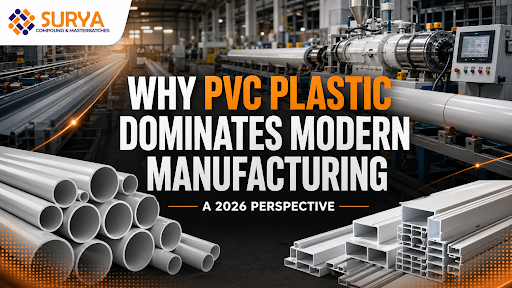
Whether you are looking at the pipes in your walls, the flooring under your feet, or the medical tubing in a hospital, you are witnessing the incredible versatility of PVC plastic. Known scientifically as polyvinyl chloride plastic, PVC has become the third most widely produced synthetic plastic polymer in the world.
But what makes this material so indispensable? To truly appreciate it, we have to look past its everyday appearance and understand the science, the transformation, and the diverse PVC plastic uses that keep our modern world running.
What is PVC Plastic?
At its simplest, PVC plastic is a combination of carbon, hydrogen, and chlorine. It is unique among plastics because more than half of its weight is derived from salt—a common and abundant natural resource.
Unlike many other polymers that are naturally flexible, polyvinyl chloride plastic is inherently rigid. However, by adding “plasticizers” during the formation of PVC, manufacturers can transform it into a soft, pliable material. This “dual personality” is exactly why PVC is found in both heavy-duty construction pipes and flexible garden hoses.
The Standout PVC Material Properties
The global reliance on PVC plastic isn’t accidental. It possesses a specific set of properties that make it a superior choice for long-term applications:
- Durability and Longevity: PVC is resistant to weathering, chemical rotting, corrosion, and abrasion. Many PVC pipes are estimated to have a lifespan of over 100 years.
- Flame Retardancy: Because of its high chlorine content, PVC is naturally fire-resistant. It stops burning once the external heat source is removed.
- Cost-Effectiveness: It is incredibly affordable to produce and maintain compared to traditional materials like wood, metal, or concrete.
- Electrical Insulation: PVC does not conduct electricity, making it the gold standard for cable insulation and electrical housing.
- Chemical Resistance: It remains stable even when exposed to acids, salts, and bases.
Common PVC Plastic Uses
The versatility of this material allows it to span almost every industrial sector:
- Construction: This is the largest market. From water and sewage pipes to window frames, siding, and roofing membranes.
- Healthcare: PVC is vital for life-saving equipment like blood bags, IV tubing, and surgical gloves because it is easy to sterilize and does not leak.
- Electronics: It is used to coat the wires and cables that power our homes and transmit our data.
- Automotive: Found in interior dashboards, door panels, and underbody coatings to protect against gravel and moisture.
- Consumer Goods: Raincoats, shower curtains, inflatable toys, and even credit cards are all made of various forms of PVC.
The PVC Plastic Manufacturing Process
Creating PVC is a multi-stage journey that involves high-pressure chemistry. Here is a breakdown of the formation of pvc and the pvc plastic manufacturing process:
1. Extracting the Raw Materials
The process begins with two main ingredients: salt (sodium chloride) and petroleum (ethylene). Through electrolysis, chlorine is extracted from the salt. Meanwhile, ethylene is derived from oil or natural gas.
2. Creating Vinyl Chloride Monomer (VCM)
The ethylene and chlorine are combined to create ethylene dichloride, which is then converted at high temperatures into a gas called Vinyl Chloride Monomer (VCM). This is the basic “building block” of the plastic.
3. Polymerization
In the most critical step of the pvc plastic manufacturing process, VCM molecules are linked together in a chemical reaction called polymerization. This creates long molecular chains, resulting in polyvinyl chloride plastic in the form of a fine white powder.
4. Compounding and Additives
The raw PVC powder cannot be used on its own; it is too brittle. It must be mixed with stabilizers, lubricants, and pigments. This is where Surya compounds & masterbatches come into play. These additives are the secret to giving PVC its specific color, UV resistance, and flexibility.
5. Final Shaping
The compounded material is then heated and forced through a die (extrusion) or into a mold (injection molding) to create the final products we see every day.
The Human Future of PVC
In 2026, the conversation around PVC plastic is shifting toward sustainability and efficiency. Because PVC is 100% recyclable, the industry is focusing on “closed-loop” systems where old pipes and flooring are ground down and reborn as new products.
However, the quality of a PVC Product—how long it lasts and how well it performs—depends entirely on the chemistry of its additives. A pipe is only as strong as the stabilizers inside it, and a wire is only as safe as the insulation grade of its masterbatch.
This is why choosing the right partner in the supply chain is essential. At the heart of polymer innovation, Suryamb provides the technical backbone for high-performance plastics. As an industry leader in Surya compounds & masterbatches, they understand that the “perfect” PVC product requires a precise chemical balance. Whether you are aiming for vibrant colors or industrial-grade durability, Suryamb delivers the additives that turn raw polymers into world-class solutions.
