

Introduction
The plastic industry has grown into one of the most dynamic sectors of modern manufacturing, catering to everything from packaging and consumer goods to automotive, electronics, and medical applications. While plastics themselves offer remarkable versatility, it is through the use of masterbatches that their properties are fine-tuned to meet specific needs. Among the many additives available, silicone masterbatch has emerged as one of the most valuable solutions.
This article explores the role of silicone masterbatch in the plastic industry, the science behind it, its benefits, and why its importance continues to grow. We will also cover the silicone masterbatch manufacturing process and highlight how leaders such as Surya Compound & Masterbatches are advancing this field.
1. What is Silicone Masterbatch?
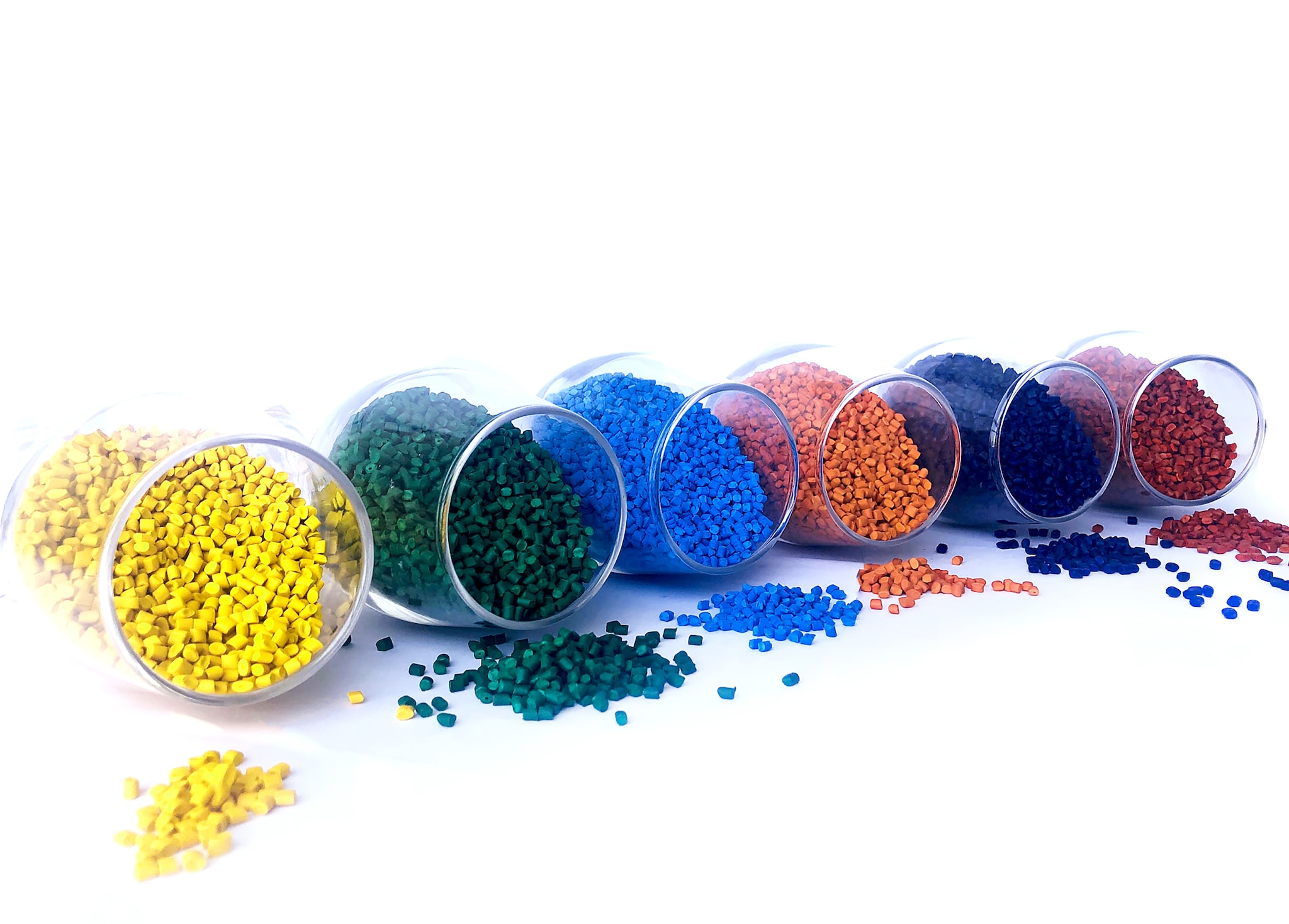
A silicone masterbatch is a concentrated formulation of ultra-high molecular weight silicone polymers dispersed into a thermoplastic carrier resin. It is introduced into plastics during processing to enhance performance without altering the base material’s fundamental structure.
Silicone acts as a powerful processing aid and performance enhancer, delivering properties such as:
- Improved slip and lubrication
- Reduced friction
- Enhanced mold release
- Better surface feel and appearance
This makes silicone-based masterbatches indispensable for a wide range of plastic applications.
2. Importance of Silicone Masterbatch in Plastic Industry
The importance of silicone masterbatch lies in its ability to improve both the processing and end-use performance of plastics. Without it, many applications would face issues such as poor flow, high friction, and surface defects.
Why it Matters:
- Processing Efficiency: Reduces cycle times and wear on machines.
- Product Quality: Ensures smooth surfaces, consistent finishes, and reduced defects.
- Cost Efficiency: Extends equipment life and reduces scrap rates.
- Versatility: Applicable across packaging, automotive, electronics, textiles, and healthcare.
In short, silicone masterbatch bridges the gap between raw polymer properties and industry-specific demands.
3. Benefits of Silicone Masterbatch
The benefits of silicone masterbatch are extensive, influencing everything from production speed to consumer satisfaction.
3.1 Processing Benefits
- Improved Flow: Acts as an internal lubricant, reducing friction during extrusion and injection molding.
- Reduced Cycle Times: Faster demolding and cooling translate into greater output.
- Energy Savings: Lower processing temperatures and pressures are possible.
- Reduced Wear: Protects machinery by reducing stress and abrasion.
3.2 Product Benefits
- Enhanced Surface Finish: Provides glossy, scratch-free, and soft-touch surfaces.
- Slip Properties: Essential for films and packaging that need easy sliding.
- Anti-blocking: Prevents films from sticking together during production or storage.
- Durability: Improves abrasion resistance and longevity of finished products.
- Consumer Appeal: Creates a smooth, premium feel for packaging and consumer goods.
3.3 Environmental & Economic Benefits
- Lower Waste: Reduced rejections due to defects.
- Recyclability: Compatible with many recycling processes.
- Cost Savings: Optimizes production without expensive modifications.
These multiple layers of advantages explain why silicone masterbatch is one of the most valued additives in plastics today.
4. Silicone Masterbatch Manufacturing Process
The silicone masterbatch manufacturing process involves precision engineering to achieve uniform dispersion of silicone within the carrier resin.
Step-by-Step Process:
- Material Selection: Choosing ultra-high molecular weight silicone polymers and compatible thermoplastic carriers.
- Mixing: Accurate dosing of silicone and additives into the base resin.
- Extrusion: Using twin-screw extruders for high shear mixing and dispersion.
- Cooling: Extruded material is cooled to stabilize the compound.
- Pelletizing: The cooled strands are cut into pellets for easy handling.
- Quality Testing: Pellets undergo rigorous testing for dispersion, melt flow, slip performance, and compatibility.
- Packaging: Sealed and delivered under controlled conditions to ensure quality.
The process demands strict control to ensure consistency, as even minor variations can impact performance.
5. Applications of Silicone Masterbatch in the Plastic Industry
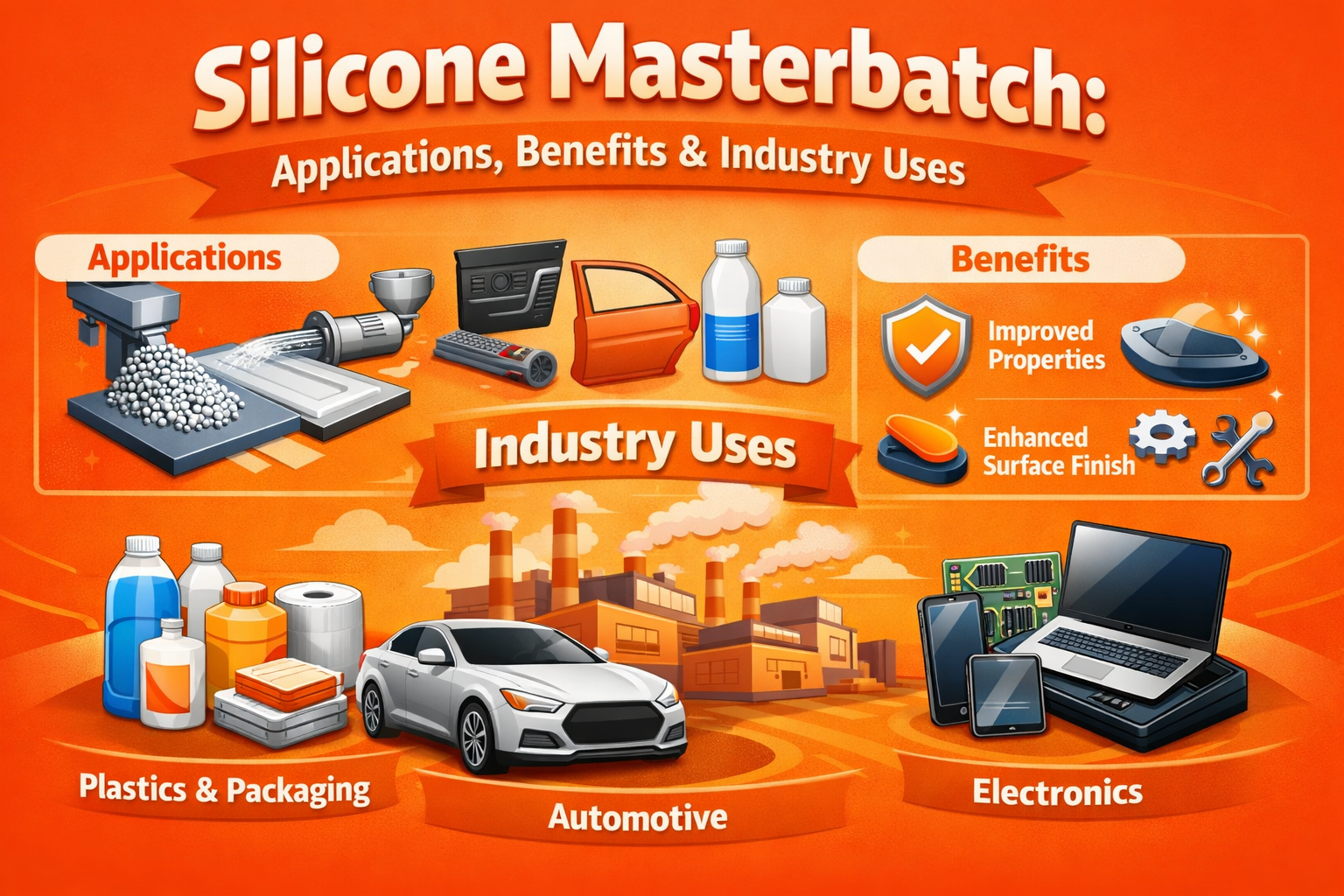
Silicone masterbatch is widely used across multiple sectors:
- Packaging: Provides slip, antiblock, and smooth surface for BOPP, CPP, and PE films.
- Automotive: Enhances durability, abrasion resistance, and surface feel in interior components.
- Electronics: Improves mold release and surface aesthetics of casings and parts.
- Consumer Goods: Creates scratch-free, glossy finishes and soft-touch feel for products.
- Textiles & Fibers: Facilitates spinning, improves fiber softness, and reduces breakage.
- Medical Applications: Ensures biocompatibility and durability in devices and packaging.
Its versatility proves the importance of silicone masterbatch in modern industries.
6. How Silicone Masterbatch Improves Film and Molded Products
For Films:
- Reduces film blocking during winding and storage.
- Enhances slip for easier processing and handling.
- Improves clarity and smoothness.
For Molded Products:
- Ensures easy mold release, lowering cycle times.
- Provides scratch resistance for long-term durability.
- Enhances tactile quality, creating premium surfaces.
Both film and molding applications demonstrate the benefits of silicone masterbatch in practical manufacturing.
7. Challenges in Using Silicone Masterbatch
While silicone masterbatch is beneficial, certain challenges exist:
- Dispersion Quality: Poor dispersion can create surface defects.
- Compatibility: Some formulations may not suit specific resins.
- Overuse Issues: Excessive addition can affect mechanical properties.
- Cost Considerations: High-performance silicone grades can be more expensive.
These challenges emphasize the need for a trusted silicone masterbatch manufacturer to ensure tailored, optimized solutions.
8. Selecting the Right Silicone Masterbatch Manufacturer
Choosing the right partner is critical. Key factors include:
- Expertise in the silicone masterbatch manufacturing process
- Strong R&D capabilities for custom solutions
- Certifications for food-grade and medical compliance
- Proven track record in consistent dispersion quality
- Technical support for application-specific optimization
Working with an established partner ensures reliability and performance.
9. Trends in Silicone Masterbatch Development
The field is evolving with exciting innovations:
- High-Performance Grades: Designed for extreme environments in automotive and electronics.
- Eco-Friendly Solutions: Formulations compatible with biodegradable plastics.
- Smart Additives: Integration of antimicrobial or anti-fog functionalities.
- Nanotechnology: Use of nano-silicone particles for ultra-high dispersion and superior results.
These advancements demonstrate how silicone masterbatch continues to shape the future of the plastic industry.
10. Role of Surya Compound & Masterbatches
Among manufacturers, Surya Compound & Masterbatches has established itself as a trusted partner in the plastic industry. With advanced technology, robust R&D, and a commitment to quality, the company provides high-performance silicone masterbatches tailored to diverse applications.
From packaging and automotive to medical and consumer goods, Surya Compound & Masterbatches delivers solutions that optimize performance, reduce costs, and ensure compliance with safety standards. Their customer-centric approach makes them a go-to choice for industries seeking innovation and reliability.
Conclusion
The importance of silicone masterbatch in the plastic industry cannot be overstated. From enhancing processing efficiency and durability to delivering superior product aesthetics and consumer appeal, silicone-based masterbatches play a pivotal role in modern plastics.
By understanding the benefits of silicone masterbatch, its applications, and the silicone masterbatch manufacturing process, businesses can make informed decisions that lead to better quality products and higher efficiency. Partnering with the right manufacturer is crucial, and companies like Surya Compound & Masterbatches ensure that industries have access to innovative, reliable, and performance-driven solutions.
As the plastic industry evolves, silicone masterbatches will remain a cornerstone of advancement — enabling better, stronger, and more sustainable products for the future.
