

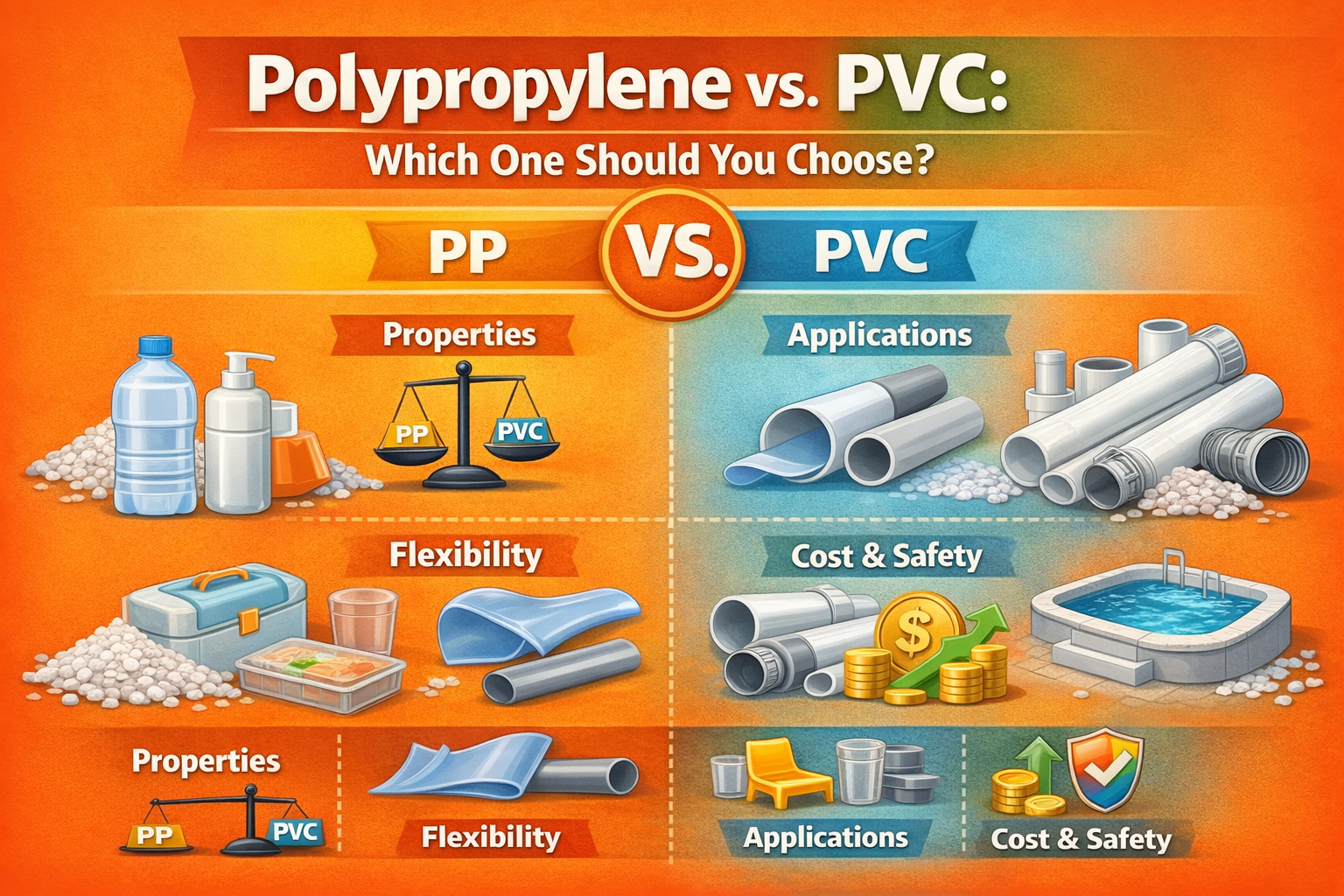
In plastic manufacturing, polypropylene (PP) and polyvinyl chloride (PVC) are two of the most widely used thermoplastic polymers. Both originate from petroleum and are processed through injection molding, extrusion, and thermoforming—but their properties and ideal applications differ significantly. This guide helps you decide between them and shows how Surya masterbatches can optimize their characteristics.
1. Understanding Polypropylene (PP)
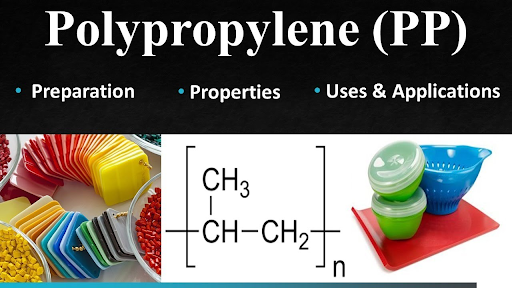
Polypropylene plastic is derived from the polymerization of propylene. Discovered in 1951, PP is known for its excellent chemical resistance, toughness, and low density . Important attributes include:
- High melting point (~327 °F / 164 °C) for PP, which makes it suitable for heat-sensitive applications .
- Minimal water absorption (~0.01% after 24-hour soaking) and high tensile strength (25–40 MPa) .
- PP is 100% recyclable, offering environmental benefits .
It’s widely used in food packaging, automotive components, textiles, and medical devices.
2. Understanding PVC (Polyvinyl Chloride)
Polyvinyl chloride plastic is formed from vinyl chloride monomers. First commercially produced in the 1920s, PVC is notable for its:
- High density (1.3–1.45 g/cm³ for rigid) and good environmental resistance.
- Two forms: rigid PVC (for piping, window frames) and flexible PVC (e.g., cable insulation, vinyl siding).
- Melting range of 212–500 °F, depending on additives .
PVC is prominent in plumbing, construction, cable insulation, and medical tubing.
3. Side-by-Side Comparison
| Property | Polypropylene (PP) | PVC |
| Melting Temp | ~327 °F / 164 °C (xometry.com, suryamb.com) | 212–500 °F depending on formulation |
| Operating Temp | Up to 180 °F (~82°C) | Rigid: <140–203 °F |
| Tensile Strength | 25–40 MPa | Rigid: 34–62 MPa; Flex: 7–25 MPa |
| Impact Resistance | High | Lower than PP |
| Water Absorption | ~0.01% | Rigid: 0.04–0.40%; Flex: 0.20–1.00% |
| Density | ~0.9 g/cm³ | 1.1–1.45 g/cm³ |
| UV Resistance | Poor (yellows in sun) | Good, especially rigid PVC |
| Recyclability | Fully recyclable | Recyclable but complex due to additives |
| Cost | ~$0.27/kg | ~$0.28/kg |
4. Application Use Cases
Polypropylene (PP):
Ideal for packaging, automotive parts, textiles, medical-grade devices, and chemical containers .
PVC:
Preferred for construction and infrastructure, such as pipes, siding, cables, flooring, and veterinary products.
Shared Uses:
Both suitable for wire insulation, geo textiles, and certain medical components like bottles and trays .
5. Safety & Sustainability Considerations
- Environmental impact: PP is easier to recycle; PVC requires complex handling and feedstock recycling due to chlorine content .
- Health hazards: PVC additives like phthalates can leach; processing risks include hydrogen chloride release under fire..
- Sustainability: PP is eco-friendlier; PVC recycling is possible but more involved .
6. Role of Surya Masterbatches
Surya Masterbatches Pvt Ltd enhances PP and PVC properties through specialized color and additive masterbatches . Their PP compounds are tailored with fillers like glass fiber, talc, and conductive materials to improve strength and utility—valuable in packaging and industrial uses .
For PVC, Surya provides premium PVC compounds optimized for durability and flexibility, essential in construction and electrical sectors.
7. Choosing Between Polypropylene and PVC
Consider these factors:
- Application Requirements: Choose PP when heat resistance, food-grade safety, and recyclability matter. Use PVC for rigidity, fire resistance, and UV resistance.
- Environmental Goals: PP is the greener choice due to simpler recycling.
- Processing Needs: PP’s higher melting point suits hot-water uses; PVC allows easier molding and UV durability.
- Aesthetics and Finishing: PVC supports rigid, glossy finishes, while PP is excellent for flexible, lightweight designs.
- Cost Efficiency: Material costs are close, but long-term lifecycle and recyclability might
9. Future Trends and Innovations
- Eco-friendly additives: Surya’s bio-fillers and masterbatches aim for greener compounds.
- High-performance composites: Enhanced PP for automotive and appliances.
- PVC optimization: Improved UV, flame retardancy, and reduced hazardous additives.
- Recycling initiatives: Open-loop recycling—Surya’s additives ensure stable performance even in recycled plastic blends.
10. Conclusion
Polypropylene vs PVC represents a fundamental choice in material selection:
- Choose PP for lightness, heat tolerance, recyclability, and food-grade use.
- Opt for PVC for durability, rigidity, UV resistance, and fire performance.
Both can be further optimized with Surya Compounds & masterbatches, which enhance color, strength, and functional traits. Your final choice should align with application requirements, environmental goals, performance needs, and cost considerations.
Together, masterbatch science bridges the gap—empowering plastics to meet rigorous demands and evolving market standards.
