

With the pressing concern for the health of our planet, biodegradable plastics are now a more acceptable option than non-renewable, oil-derived plastics. These materials have been engineered to degrade when exposed to natural elements, helping to cut down long-term pollution and plastic waste. Industries and consumers adopting environmentally friendly options need to understand the types of biodegradable plastics, their characteristics, and their uses.
Degradable plastics are examined in this article, along with the classification of biodegradable polymers and examples of items made from biodegradable plastics.
What Is Degradable Plastic?
Plastics that are capable of degradation break down via natural environmental processes such as UV light, moisture, temperature, or by living organisms. In point of fact, it is vital to note that not all biodegradable plastics are degradable.
Degradable plastics, often called Oxo-degradable plastics, break down into microplastics. This happens even before they decompose completely.
Plastics that are biodegradable are broken down by bacteria and other organisms into carbon dioxide, water, and biomass.
This point is of considerable importance when considering the environmental effects of the use of plastics.
Biodegradable Plastics Explained?
Breaking down thanks to tiny living things found in nature, some plastics fall apart over time when built from breakable stuff. These can come from endless supplies like plants, limited oil reserves, or a mix of both kinds.
Frequently found in settings that prioritize eco-conscious practices alongside fast-moving production cycles.
Types of Biodegradable Polymers
Built from nature or made in labs, biodegradable polymers get grouped by where they come from. Their molecular makeup also shapes how they’re sorted.
Main Classifications
- Bio-based biodegradable polymers
- Synthetic biodegradable polymers
- Natural polymer-based plastics
Each category of battery has its own degradation characteristics and performance features.
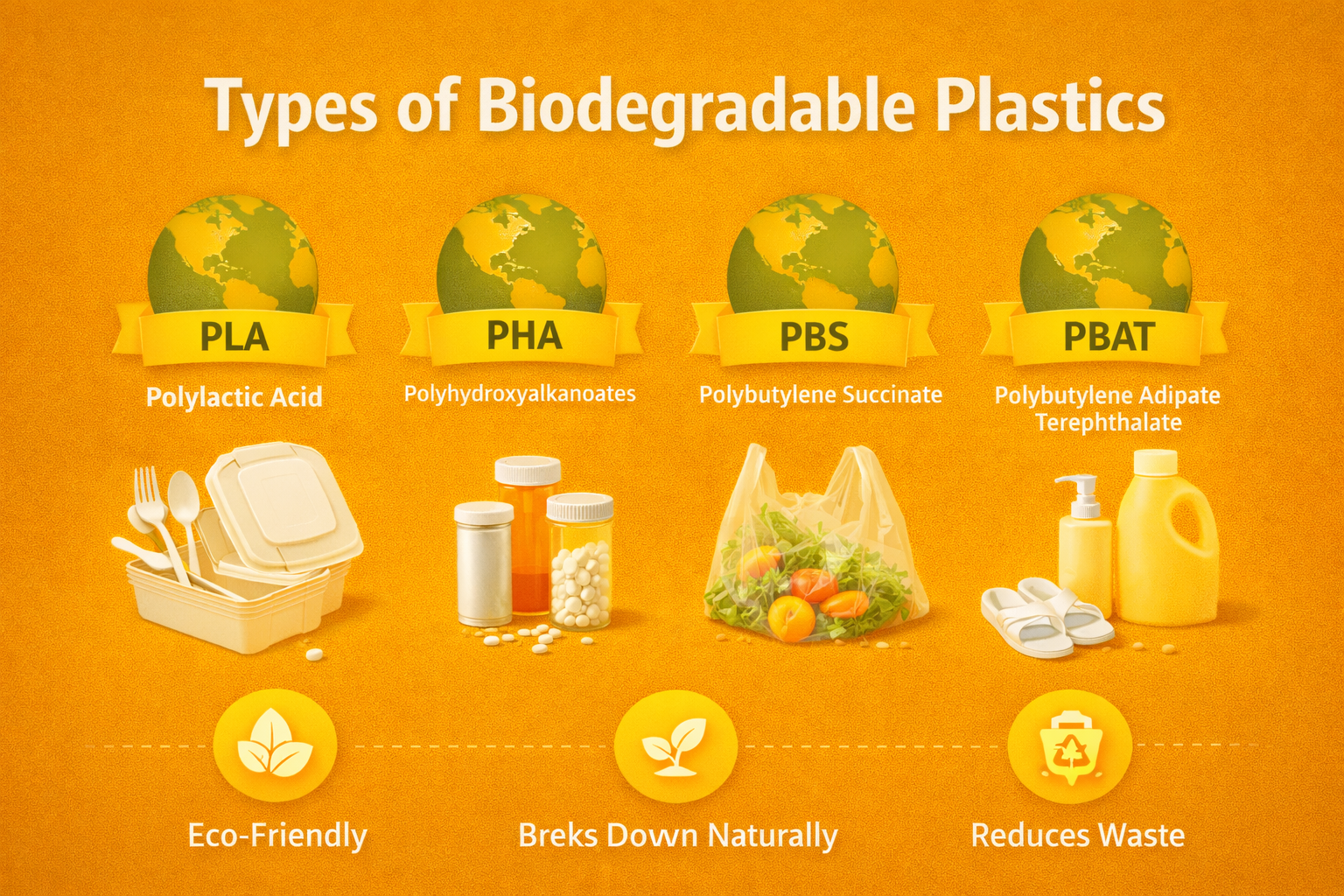
1. Polylactic Acid (PLA)
Polylactic acid is one of the most used biodegradable plastics.
Key Features
- Produced from renewable materials, including cornstarch or sugarcane.
- They are fully compostable under industrial conditions.
- Crystal clear and stiff.
Biodegradable Plastic Examples
- Food packaging
- Disposable cups and cutlery
- 3D printing filaments
Poly Lactic Acid is increasingly used due to the combination of its being eco-friendly and of high performance.
2. Polyhydroxyalkanoates (PHA)
PHA polymers are formed when microorganisms ferment sugars and then excrete a polysaccharide byproduct that is made up of carbon, hydrogen and oxygen.
Key Features
- It is made entirely of biodegradable materials which break down naturally in the environment.
- Renewing from biological renewable sources.
- High biocompatibility
Common Applications
- Food packaging
- Medical products
- Agricultural films
PHA exhibits a favourable biodegradability profile in both soil and marine environments.
3. Starch-Based Biodegradable Plastics
Artificially made plastic materials that are biodegradable are produced by mixing starches, which are obtained naturally, with plastics which also are also biodegradable.
Key Features
- Such items are produced from plants such as potatoes or corn.
- Cost-effective
- The material can break down when exposed to composting conditions.
Biodegradable Plastic Products
- Compostable bags
- Packaging films
- Disposable food containers
These materials are typically utilised in disposable products.
4. Polybutylene Succinate (PBS)
A polymer known as PBS is one which is biodegradable and man-made. Its properties are akin to those of standard plastics.
Key Features
- Flexible and durable
- With high heat deflection temperatures, the ULTEM 1000 provides excellent heat resistance.
- These materials will degrade in the environment.
5. Polybutylene Adipate Terephthalate (PBAT)
Bioplastics such as PBAT are highly versatile and can be blended with other materials to produce flexible, biodegradable plastics.
Key Features
High degree of versatility.
- Fully biodegradable
- Fossil-based but compostable
Applications
- Compostable bags
- Packaging films
- Agricultural products
The flexibility of a product made from starch can be improved by using PBAT.
6. Cellulose-Based Biodegradable Plastics
Plastics derived from cellulose have a natural plant fibre origin.
Key Features
- Renewable and biodegradable
- Clear and robust structure
- Produced from either wood pulp or cotton linters and no-ills.
Common Products
- Packaging films
- Coatings
- Disposable consumer items
They have been used for years in numerous green and environmentally friendly projects.
7. Chitosan-Based Biodegradable Plastics
The biopolymer chitosan can be derived from the chitin of crustacean waste such as the remains of crab and shrimp shells.
Key Features
- Biodegradable and biocompatible
- Antimicrobial properties
- Renewable resource
Applications
- Food packaging
- Medical and pharmaceutical uses
- Agricultural coatings
Chitosan polymers are being developed into a range of plastic alternatives for particular uses.
Biodegradable Plastic Examples in Everyday Use
Some common biodegradable plastic products include:
- Compostable shopping bags
- Food packaging containers
- Disposable cutlery and plates
- Agricultural mulch films
- Medical packaging
Made with materials that can be recycled, these products help to decrease their environmental impact when disposed of.
Advantages of Biodegradable Plastics
- Reduced environmental pollution
- Lower dependence on fossil fuels
- Supports circular economy goals
Such materials are generally utilised for short-life applications.
Biodegradable plastics, when used effectively, are helpful in the preservation of a sustainable waste disposal system.
Limitations of Biodegradable Plastics
These plastics may have several benefits, but the biodegradable plastics have drawbacks:
- Require specific conditions for degradation
- Compared to the common plastics, the price of the bioplastics is generally higher.
- Limited recycling compatibility
To ensure the responsible disposal of products, it is essential to consider the constraints of batteries and other consumables.
Conclusion
The production of biodegradable plastics is proving to be a major factor in dealing with plastic waste globally. When industries consider biodegradable plastics in terms of their classification and applications, they can weigh up the ecological benefits with performance. Various plastics, ranging from PLA to PHA, can be used for packaging as well as disposable tableware. Furthermore, in addition to these two, many other biodegradable materials, such as starch-based and cellulose-derived materials, exist.
In an era where environmentally friendly products are increasingly sought after, the drive to invent new eco-friendly materials must be maintained. The company Surya Compound & Masterbatches have been working to make plastic production more sustainable by developing biodegradable plastics. These materials can be used in a variety of industrial applications. The aim is to make the production of plastics more environmentally friendly.