

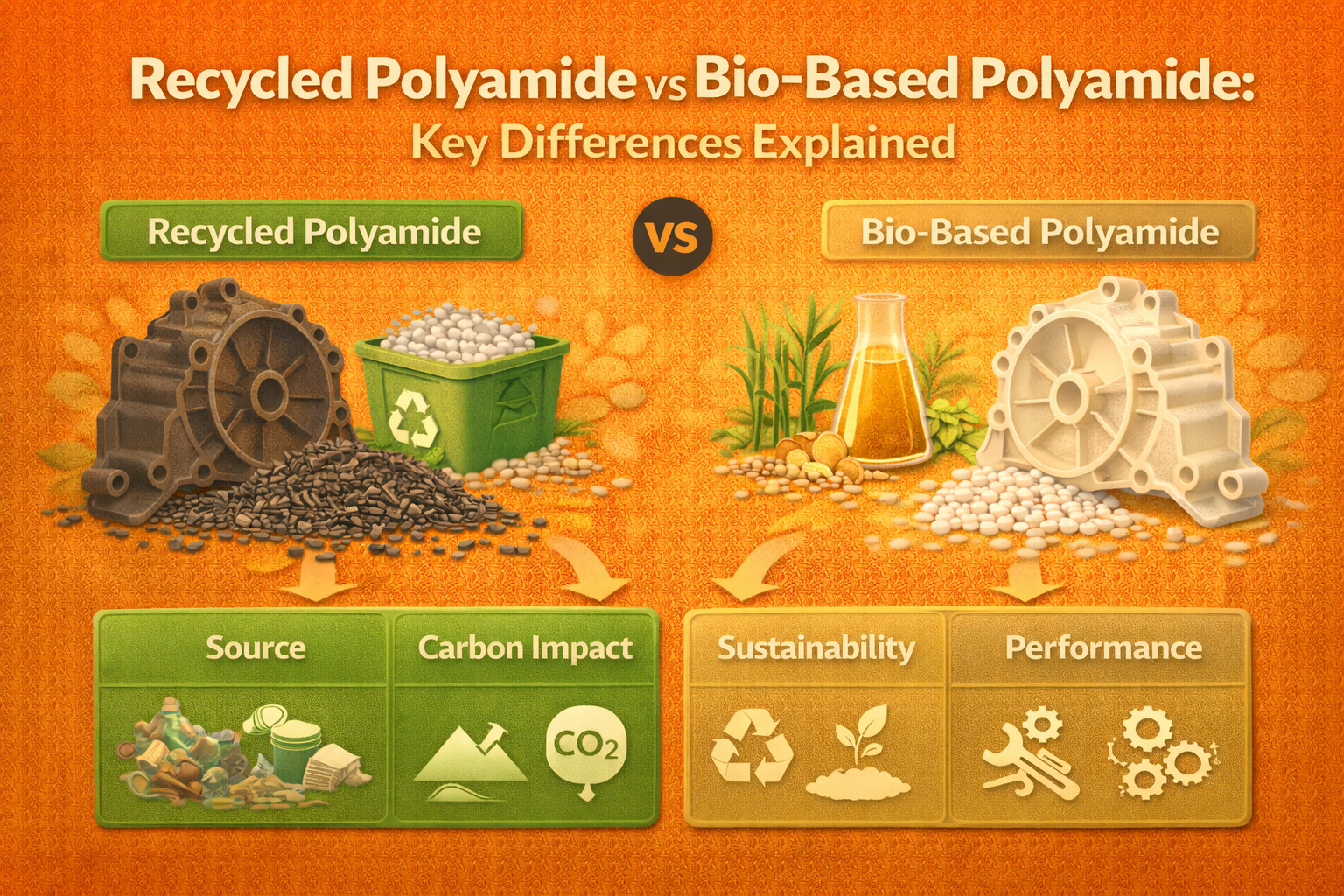
One year into the future, thinking shifts around tough plastics because of cleaner loops and zero-emissions goals. Across fields like cars or gadgets, picking eco options now ties closely to exact performance needs instead of vague ideals. What stands out lately? A closer look at recycled polyamide vs biobased polyamide differences compared to its plant-made cousin.
One material comes from plants, another from recycled waste – each changes how nylon impacts nature. Performance varies sharply between them, yet both lighten the load on ecosystems. Our team at Surya compounds & masterbatches tunes their strength, heat resistance, and flexibility. Matching real-world demands drives every adjustment we make. Engineering tough parts means never treating sustainability as a shortcut.
Origin and Lifecycle of the Contenders
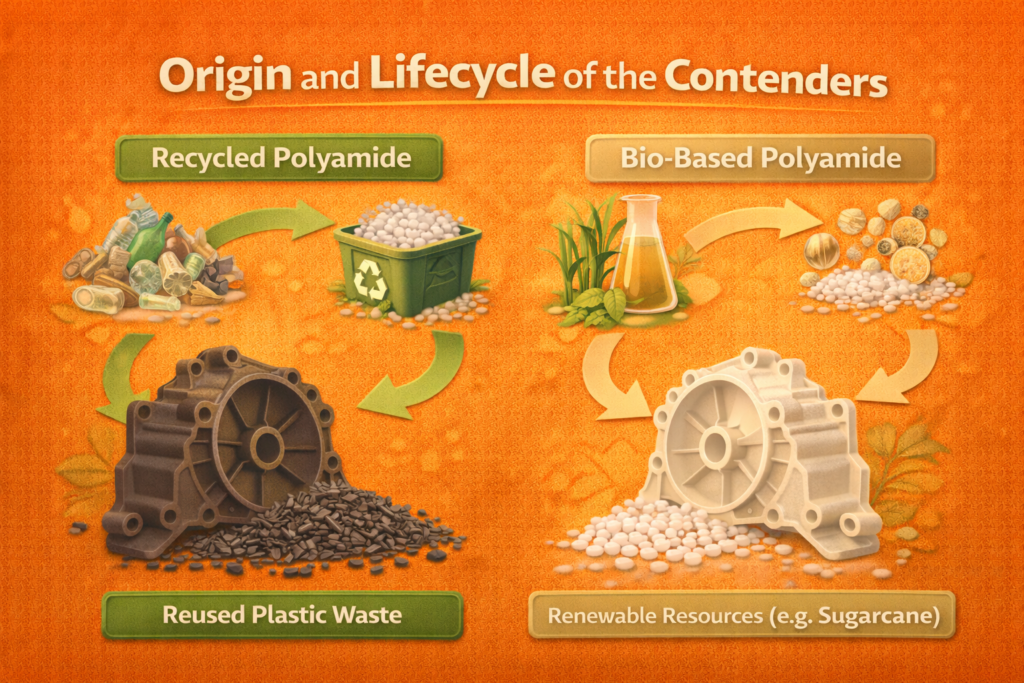
One way to start is by checking the source of each material when comparing recycled nylon vs biobased nylon materials. Where things begin makes a difference in how they’re made later on.
Recycled Polyamide Following the Circular Route
Waste materials give rise to Recycled Polyamide. Two broad groups cover what it becomes:
- Post-Industrial: Fragments left behind when products take shape – bits that chip off, pieces set aside. These leftovers come straight from factory floors, born in the making. Not from homes or streets, but workshops where things are built. Trimmings pile up, broken bits get tossed aside. This waste slips into recycling streams right after production runs. Faulty shapes, uneven edges, material cut too much – all part of the flow. No second life needed, just a new form.
- Post-Consumer: Fishing nets once used at sea now sit discarded, their journey ending in reuse. Old carpets, pulled up from floors long after their time, find new purpose. Parts from vehicles past their prime get another chance through recycling. These everyday discards transform into something useful again.
Biobased Polyamide: A Step Toward Renewables
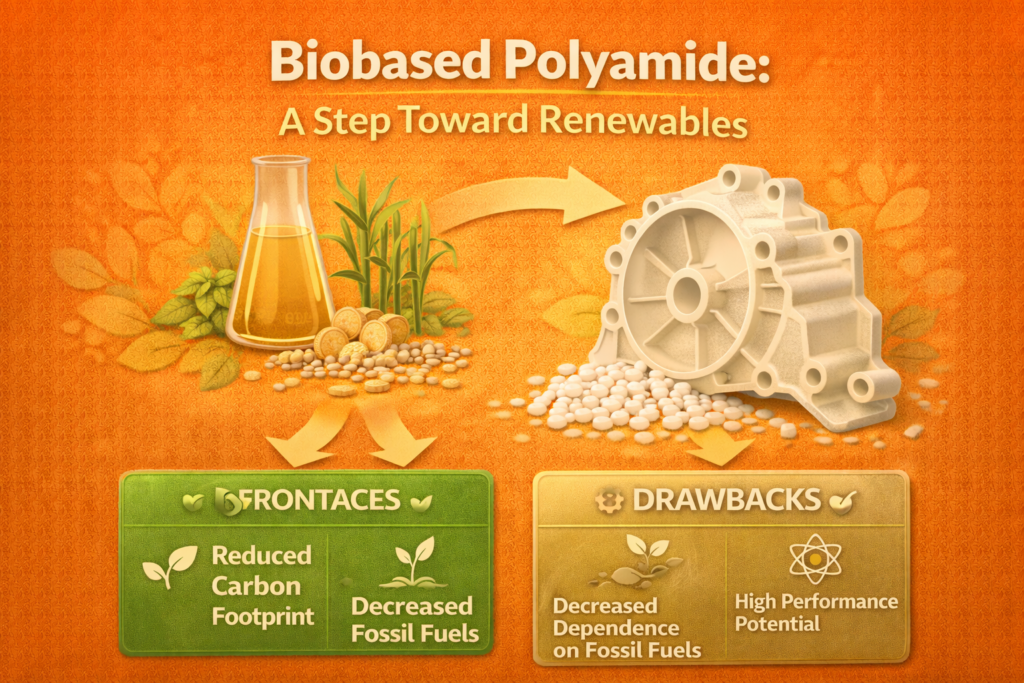
From plants instead of oil, biobased polyamide takes shape. Castor beans often play the lead role – dry lands grow them, food chains do not. Oil pressed out undergoes a change in labs, step by step. Molecules shift form, become building blocks for materials such as PA1010 or PA11. A primary biobased polyamide benefit is the move toward renewable resources.
1. Recycled Polyamide Material Properties
Finding out how recycled polyamide material properties behave means looking closely at what happens during recycling, particularly when it’s mechanically processed, since those steps tend to alter the structure of the polymer chains.
- Mechanical Strength and Durability: Fresh nylon loses a bit of its toughness each time it gets heated and pushed through a die – heat takes a small toll on the long molecular strands. Strength dips slightly. Impact resilience follows. But at Surya, smart blending steps in where raw material falls short. Additives slip between chains. They shore up weak spots. Performance climbs back. Sometimes goes further than original. Melted scraps behave like new – or better.
- Consistency and Purity: What makes recycling tough? It comes down to keeping things pure. PCR batches sometimes carry unwanted stuff – even different kinds of Nylon get jumbled together. Getting top-grade recycled polyamide means each batch must go through strict separation, fine filtering too. Only then does the material perform steadily when it’s shaped by injection molding.
- Carbon Footprint: Waste drops when old plastic gets reused instead. Keeping it out of dumps or seas cuts down how much climate pollution comes from making something new.
2. Biobased Polyamide Benefits
High performance usually grabs attention when talking about the biobased polyamide benefit. Carbon capture plays a role too, though it sometimes stays in the background. What stands out tends to shift depending on who’s discussing it. Some emphasize strength and durability first. Others bring up how $CO_2$ gets pulled from air during production. The spotlight moves between these traits without fixed rules.
- Superior Dimensional Stability: Humidity changes barely affect some plant-based polyamides – they stay stable where regular PA6 or PA66 would absorb more water. Their resistance to swelling keeps shapes consistent, especially useful when exact sizing matters in electronic parts.
- Resists Chemicals and Heat: Famous among biobased options, PA11 shrugs off chemicals, oils, yet handles fuel without breaking down. Flexibility stays intact even when cold bites hard – something recycled versions from oil often can’t match.
- Carbon Neutrality: When plants grow, they take in $CO_2$. Using castor beans for biobased polyamides means that carbon stays trapped instead of returning to the air. This process usually leaves behind far less climate impact compared to recycled oil-based plastics.
3. Comparing Performance: Recycled vs. Biobased
Looking at recycled polyamide vs biobased polyamide differences stacks up against the biobased versions reveals key contrasts. Performance traits pull them apart when examined closely.
|
Feature |
Recycled Polyamide |
Biobased Polyamide |
|
Source |
Waste Streams |
Sourced From Castor Oil |
|
Tensile Strength |
Varies With Recycled Input | Higher Consistent Strength |
|
Moisture Uptake |
Similar To Conventional Nylon |
Low Absorption In Biobased Variants |
| Advantage | Reduces Reliance On Virgin Resources |
Supports Renewable Material Shift |
Thermal Behavior: Fresh from nature, biobased materials melt predictably, flowing smoothly into intricate shapes. Already used once, recycled stuff has faced heat before – its tolerance for processing runs tighter. Because of past exposure, its range for reshaping is more limited than new plant-based resins.
4. Market difficulties ahead for 2026
Into 2026, these materials hit snags – Surya compounds & masterbatches guide customers around them. Though challenges grow, support stays close, built right into the chemistry. Each step forward leans on smart blends, quietly smoothing the path. Not every solution shouts; some just fit, like a missing piece snapped into place.
- The Cost Factor: Back when farmers started growing materials for bio-based polyamides, costs stayed high because turning crops into plastic involved tricky steps. On the flip side, recycling old polyamide tends to save money – yet it only works well if incoming material stays consistent over time.
- Aesthetics and Color: From old nylon scraps comes a shade close to gray or deep charcoal, simply because leftovers blend unpredictably. Brightness, clarity, lively tones – these need top-tier color concentrates to show up clearly. A plant-powered version begins life pale and pure, like raw silk in feel and look. Full rainbow options open up right from the start with that base.
5. Strategic Applications
Automotive Sector: Fans tucked beneath the hood, along with brackets plus engine covers, get reused when strength matters more than looks. From plants, these fuel lines hold up when things get harsh – swings in heat, tough chemicals. Connections stay firm where others fail, built for wild temp swings.
Consumer Electronics: Built again: Inside parts that hold phones and computers together. One life ends, another begins inside new devices. Hidden pieces get remade, finding purpose where plastic meets metal. Built from plants, these outer shells touch your skin directly – purity stays high because dampness does not gather easily. What you wear fits close, held together by materials that resist absorbing humidity.
6. Surya Compounds and Masterbatches Play Key Roles
Starting fresh with eco-friendly materials takes more than swapping parts. Getting them to run smoothly on current machines? That’s where Surya compounds & masterbatches steps in. Their compounds and masterbatches act like adaptors – quietly making new inputs fit old systems.
- Strengthening Recycled Streams: Because recycled nylon often loses strength, we add special materials to bring it back. These adjustments mean parts built entirely from post-consumer resin work just as well as those using new petroleum-based nylon.
- Enhancing Biobased Polymers: Though biobased polyamides perform well, meeting certain industry standards usually requires extra additives like UV blockers or materials that resist fire. Because these resins have a distinct chemical makeup, standard mixes might not blend properly – our masterbatches take that into account.
- Color Consistency: Starting from the bottom of used plastic piles or navigating how light bends through plant-based resins, our color additives keep your signature green or factory blue steady each time you make a batch.
7. The Future of Sustainable Polyamides
One day soon, bio-based polyamides might live many lives. Picture materials grown from plants, later reborn again and again. These future hybrids could close the loop entirely. Renewability meets endless reuse – not just imagined, but built in. A shift like this wouldn’t chase trends. It simply makes sense, quietly. The timeline? Around 2030.
8. Making the Right Choice
One thing decides it – what you want your project to achieve. Whether that points to recycled nylon vs biobased nylon materials depends entirely on the aim.
- Choose Recycled: When cutting costs while reducing trash matters most, recycled polyamide might fit. Especially if your work ties into industries already set up to recycle – automotive fields, say, or clothing production.
- Choose Biobased: A top pick for high demands, biobased polyamide holds back water uptake while delivering strong results. Renewed each time from plant sources, it points toward lower carbon output.
Surya compounds & masterbatches aren’t about handing out raw ingredients—think of them as delivering smart chemistry that actually works in real-world green solutions. Because once you grasp the recycled polyamide vs biobased polyamide differences, your products stand a better chance at meeting what buyers will expect by 2026.