

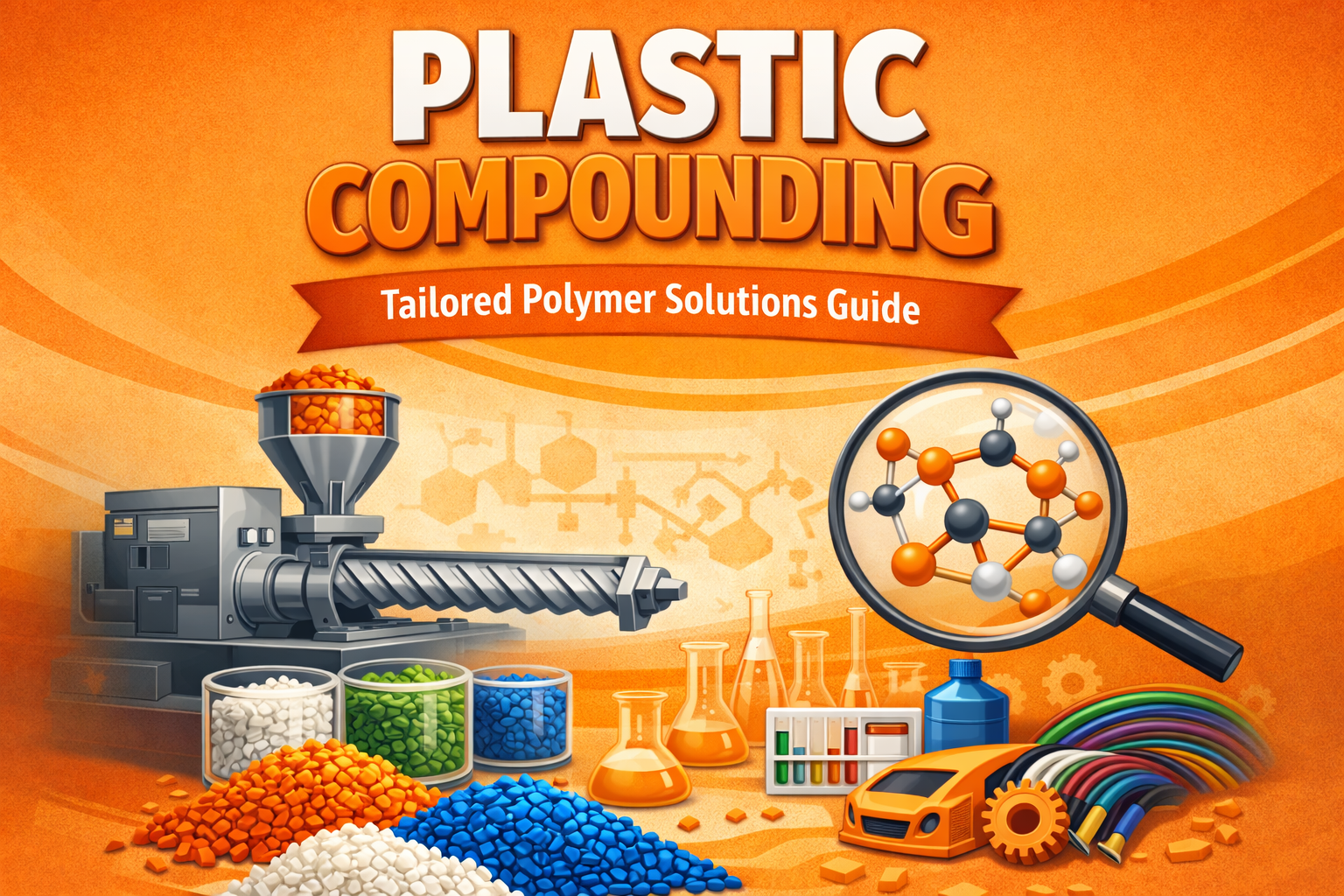
In today’s fast-paced industrial landscape, plastics have become the foundation of modern manufacturing. From packaging to automotive, medical devices to consumer electronics, polymers shape the world around us. But rarely does a raw polymer, in its basic form, meet the complex needs of diverse industries. This is where plastic compounding comes in.
Plastic compounding is the process of enhancing raw polymers by blending them with additives, fillers, reinforcements, and colorants to create a custom polymer solution with specific properties. This tailored approach transforms ordinary plastics into high-performance materials designed to excel in particular applications.
As one of the leading players in the industry, Surya Masterbatches specializes in delivering custom plastic compounding solutions that address challenges of strength, durability, thermal stability, flame retardancy, aesthetics, and sustainability. In this detailed guide, we’ll explore the concept, process, benefits, applications, and future of plastic compounding and how Suryamb is setting benchmarks in this field.
1. Introduction to Plastic Compounding
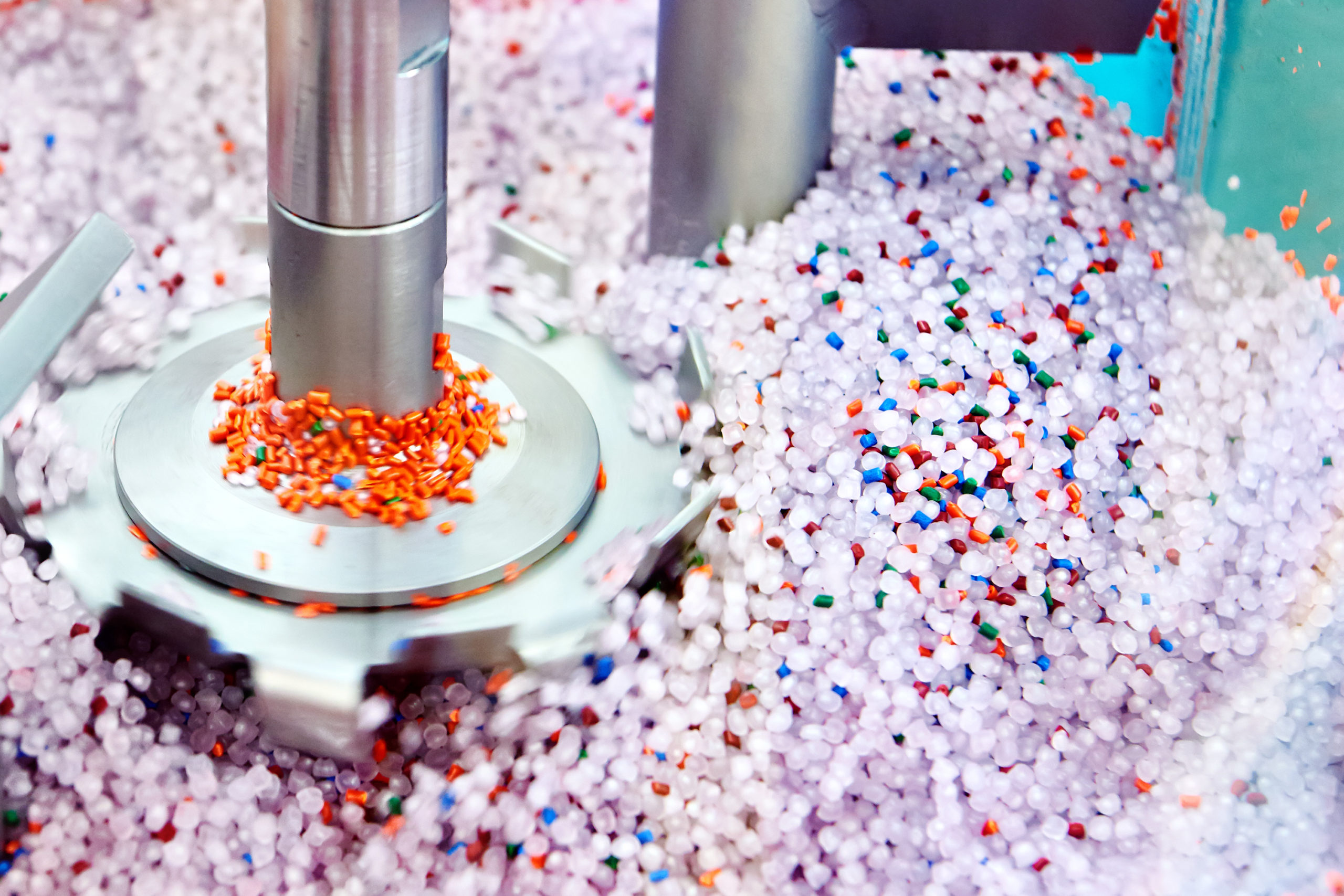
At its core, plastic compounding is about taking a base polymer like polyethylene, polypropylene, or polyvinyl chloride, and modifying it to achieve properties that suit the end product. Instead of relying solely on standard plastics, industries demand tailored polymer solutions that can withstand stress, temperature, chemicals, or UV exposure.
Suryamb’s expertise in plastic compounding ensures that each formulation is designed for precision, performance, and cost-effectiveness, empowering industries with materials that meet stringent requirements.
2. Why Plastic Compounding is Necessary
Raw polymers often lack the qualities required for specific applications. For example:
- Polypropylene may lack impact strength for automotive uses.
- Polyethylene might degrade under UV light in outdoor applications.
- PVC may require flame retardants for electrical insulation.
Through plastic compounding, manufacturers can address these gaps by incorporating additives and modifiers. This ensures plastics not only meet performance criteria but also comply with safety, environmental, and industry regulations.
At Suryamb, the focus is on delivering value-added polymers that help industries innovate while ensuring consistency and efficiency.
3. The Plastic Compounding Process
The plastic compounding process is a highly technical and controlled operation designed to achieve precise material properties. The steps include:
3.1 Selection of Base Polymer
- The foundation of the compound.
- Choices include PE, PP, PS, PVC, ABS, Nylon, PET, and specialty polymers.
3.2 Incorporation of Additives
Additives define the performance of the compound. Common additives include:
- Stabilizers (thermal, UV)
- Plasticizers (flexibility)
- Flame retardants (safety)
- Impact modifiers (strength)
- Colorants (aesthetic appeal)
3.3 Blending and Mixing
- Polymers and additives are precisely weighed and mixed.
- Uniform dispersion ensures consistent quality.
3.4 Melt Compounding
- Materials are melted and compounded using twin-screw extruders.
- Ensures additives and fillers integrate fully into the polymer matrix.
3.5 Cooling and Pelletizing
- The compounded mass is cooled and cut into pellets for ease of handling.
3.6 Quality Control
- Testing for melt flow index (MFI), tensile strength, impact resistance, color accuracy, and thermal stability.
Suryamb’s advanced compounding facilities use high-precision machinery to achieve optimum dispersion, thermal stability, and batch-to-batch consistency.
4. Custom Plastic Compounding – Tailored Solutions
Every industry has unique requirements, and custom plastic compounding provides solutions tailored to specific needs.
4.1 Strength and Durability
- Reinforced with fillers like glass fibers or talc.
- Ideal for automotive and construction sectors.
4.2 Thermal and Flame Resistance
- Incorporation of heat stabilizers and flame retardants.
- Ensures safety in electrical and electronic applications.
4.3 Aesthetic Enhancement
- Use of pigments and masterbatches for vibrant, uniform colors.
- Custom shades to align with brand identity.
4.4 Environmental Sustainability
- Biodegradable or recyclable additives.
- Reduced carbon footprint through eco-friendly compounding.
Suryamb specializes in tailoring compounds for exact specifications, ensuring industries get the best balance of performance and sustainability.
5. Types of Plastic Compounds
Plastic compounds can be classified based on their modification approach:
5.1 Filled Compounds
- Incorporation of minerals like calcium carbonate or talc.
- Enhances stiffness, dimensional stability, and cost-effectiveness.
5.2 Reinforced Compounds
- Glass fibers, carbon fibers, or aramid fibers improve strength.
- Used in high-performance applications like aerospace and automotive.
5.3 Flame-Retardant Compounds
- Essential for electrical appliances, cables, and construction.
5.4 Color Compounds
- Pigments and masterbatches added for consistent aesthetics.
- Suryamb offers color-compounded solutions aligned with customer needs.
5.5 Biodegradable and Sustainable Compounds
- Focus on eco-friendly alternatives.
- Growing importance in packaging and consumer goods.
6. Applications of Plastic Compounding
Plastic compounding finds applications across industries. Some key sectors include:
6.1 Packaging Industry
- Barrier properties, flexibility, and aesthetics.
- Films, bottles, and containers.
6.2 Automotive Industry
- Lightweight yet strong parts to reduce fuel consumption.
- Interiors, exteriors, bumpers, dashboards, and under-the-hood components.
6.3 Electrical & Electronics
- Flame-retardant and insulating properties.
- Cables, switches, connectors, and housings.
6.4 Construction
- Pipes, fittings, sheets, and profiles with enhanced durability.
6.5 Healthcare
- Medical-grade polymers with biocompatibility and sterilization resistance.
6.6 Consumer Goods
- Toys, kitchenware, and household products with vibrant aesthetics.
Suryamb’s custom plastic compounding solutions cater to all these industries with high precision and reliability.
7. Benefits of Plastic Compounding
Plastic compounding offers several advantages:
- Tailored performance to match specific applications.
- Improved mechanical and thermal properties.
- Enhanced safety with flame-retardant and stabilizing additives.
- Cost efficiency by optimizing raw material use.
- Sustainability with eco-friendly formulations.
- Aesthetic versatility through custom coloring.
Suryamb ensures its customers benefit from all these advantages through innovative formulations and strict quality assurance.
8. Quality Control in Plastic Compounding
For custom plastic compounding, consistency is non-negotiable. Suryamb maintains high quality through:
- Spectrophotometric analysis for color accuracy.
- MFI testing for flow properties.
- Mechanical property testing (tensile, flexural, impact).
- Heat aging and UV resistance testing.
- Batch-to-batch reproducibility verification.
This ensures every pellet delivered by Suryamb meets the highest standards.
9. Sustainability in Plastic Compounding
With growing environmental concerns, sustainability is integral to polymer solutions. Suryamb promotes sustainability through:
- Development of biodegradable masterbatches.
- Use of recycled polymers in compounding.
- Energy-efficient production processes.
- Compliance with global environmental standards.
10. Future of Plastic Compounding
The future of plastic compounding is evolving with technology and sustainability demands. Trends include:
- Nanocomposites for superior mechanical and barrier properties.
- Smart compounds with antimicrobial or conductive properties.
- AI-driven formulation optimization for faster customization.
- Sustainable solutions aligned with circular economy models.
Surya Masterbatches (Suryamb) is investing in R&D to stay at the forefront of these innovations.
11. Why Choose Surya Masterbatches (Suryamb)?
Selecting the right partner for custom plastic compounding is vital. Suryamb stands out for:
- Wide range of solutions – from filled to reinforced, flame-retardant to biodegradable.
- Advanced facilities – with modern twin-screw extrusion and testing labs.
- Tailored formulations – meeting specific client and industry requirements.
- Commitment to quality – ensuring consistent, high-performance compounds.
- Sustainability focus – eco-friendly materials for a greener future.
- Strong customer support – offering consultation and technical assistance.
12. Conclusion
Plastic compounding is more than just a process—it is a science of innovation, customization, and value creation. By blending polymers with additives, fillers, reinforcements, and colorants, industries can unlock the full potential of plastics for modern applications.
With a strong focus on quality, customization, and sustainability, Surya Compounds & Masterbatches has emerged as a trusted name in delivering tailored polymer solutions. From packaging to automotive, healthcare to consumer goods, Suryamb’s custom compounding expertise ensures that businesses not only meet current challenges but also stay ahead in a competitive market.
The future of plastic compounding is bright, driven by advanced technologies and sustainability goals, and with innovators like Suryamb, industries are assured of reliable, high-performance, and eco-conscious solutions.