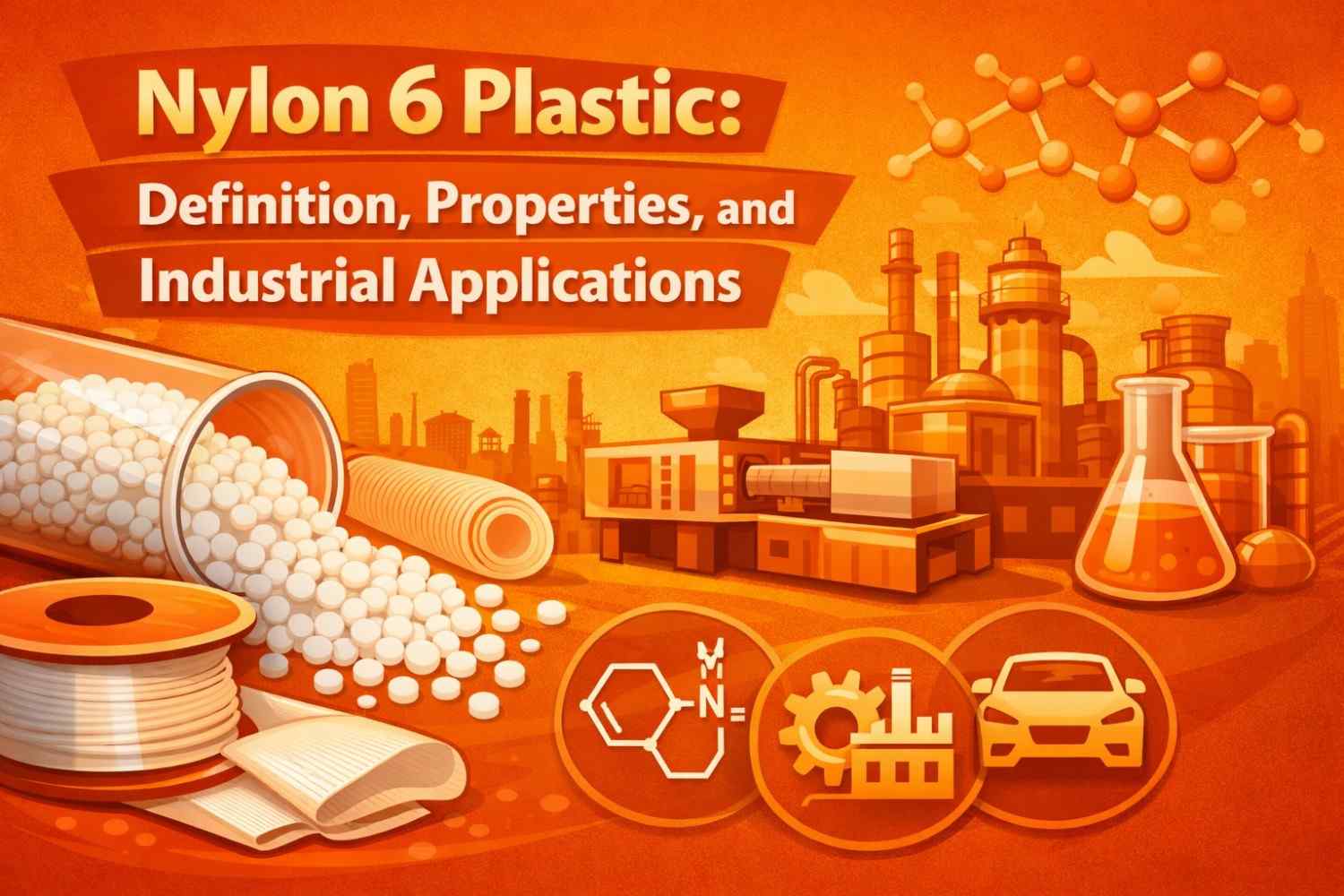
In the sophisticated world of polymer engineering, Nylon 6 (also known as Polyamide 6 or PA6) represents a critical milestone in synthetic material development. Celebrated for its high mechanical strength, elastic properties, and remarkable versatility, it has become a staple in sectors ranging from heavy-duty automotive manufacturing to high-end textile production. To unlock the full potential of this polymer, the industry relies on advanced additives and coloring solutions, where Surya compounds & masterbatches provide the essential technical edge.
What is Nylon 6?
Nylon 6 plastic is a semi-crystalline polyamide synthesized through the ring-opening polymerization of a single monomer: caprolactam. Unlike its counterpart, Nylon 66 (which is formed by two monomers), the production of Nylon 6 involves a simpler chemical process where caprolactam is heated to high temperatures in an inert atmosphere, causing the ring structure to break and form long polymer chains.
The “6” in its name signifies the six carbon atoms present in the caprolactam monomer. This molecular arrangement results in a material that is slightly more flexible and easier to process than other polyamides, while still maintaining the signature toughness associated with the nylon family.
Technical Properties of Nylon 6 Plastic
The success of Nylon 6 in industrial environments is due to its balanced physical and chemical properties. When paired with the specialized formulations of Surya compounds & masterbatches, these properties can be further enhanced to meet specific project requirements.
1. Mechanical Toughness and Impact Resistance
Nylon 6 is renowned for its high impact strength. It can absorb energy and resist cracking even under sudden mechanical stress. This “toughness” makes it a preferred choice for components that must endure vibration or physical shocks.
2. Thermal Profile: The Nylon 6 Melting Point
Nylon 6 has a melting point of approximately 220°C (428°F). While this is lower than Nylon 66, it allows for a broader processing window and lower energy consumption during injection molding and extrusion. This thermal stability ensures the material remains functional in moderately high-heat environments.
3. Nylon 6 Density and Lightweight Efficiency
With a density of roughly 1.13 to 1.14 g/cm³, Nylon 6 is significantly lighter than most metals. In industries like automotive and aerospace, substituting metal parts with Nylon 6 components treated with Surya compounds & masterbatches allows for significant weight reduction without sacrificing structural integrity.
4. Surface Finish and Aesthetics
Because of its unique crystalline structure, Nylon 6 provides an excellent surface finish. It is highly receptive to dyes and pigments. Using high-quality color masterbatches, manufacturers can achieve deep, vibrant, and consistent shades that do not fade over time.
5. Chemical and Abrasion Resistance
Nylon 6 is naturally resistant to many hydrocarbons, oils, and greases. It also possesses a low coefficient of friction, which provides excellent wear resistance for moving parts.
Common Uses and Applications of Nylon 6
Nylon 6 is utilized across a vast spectrum of products. Its adaptability is maximized when manufacturers incorporate functional additives from Surya compounds & masterbatches.
Automotive Engineering
Nylon 6 is a dominant material in the automotive sector, used for:
- Engine Components: Air intake manifolds, timing belt covers, and oil pans.
- Interior Trim: Door handles, dashboard components, and seat belt hardware.
- Under-the-Hood Parts: Connectors and housings that require resistance to heat and automotive fluids.
The Surya Advantage: By using heat-stabilized compounds from Surya compounds & masterbatches, automotive parts can maintain their mechanical properties even during long-term exposure to engine heat.
Textiles and Apparel
Because Nylon 6 can be spun into incredibly fine yet strong filaments, it is a leader in the fiber industry:
- Activewear: Providing stretch, durability, and moisture-wicking properties.
- Industrial Fabrics: Used in parachutes, ropes, and heavy-duty carpets.
- Hosiery: Its luster and dyeability make it perfect for fine garments.
Electrical and Electronics
The insulating properties of Nylon 6 make it ideal for:
- Circuit Breakers and Switches: Where flame retardancy is a safety mandate.
- Cable Ties and Connectors: Requiring flexibility combined with high tensile strength.
The Surya Advantage: Surya compounds & masterbatches provides high-performance flame-retardant (FR) masterbatches that allow Nylon 6 components to meet strict global safety certifications.
Industrial Machinery
In the industrial sector, Nylon 6 is often machined or molded into:
- Gears and Bearings: Benefiting from its self-lubricating nature.
- Conveyor Rollers: Where high wear resistance is required to handle constant friction.
Enhancing Nylon 6 with Surya Compounds & Masterbatches
Raw Nylon 6 resin is rarely used in its pure form for high-end engineering. It requires specific modifications to handle environmental stressors. Surya compounds & masterbatches specializes in these critical enhancements:
UV Stabilization for Outdoor Use
Standard Nylon 6 can become brittle and discolored when exposed to the sun’s ultraviolet rays. Surya compounds & masterbatches manufactures UV-stabilizer masterbatches that act as a chemical shield, preserving the polymer’s molecular bonds and color for outdoor applications like stadium seating or agricultural equipment.
Moisture Control and Dimensional Stability
Nylon 6 is hygroscopic, meaning it absorbs moisture from the air. While this increases its impact strength, it can affect dimensional stability. Surya compounds & masterbatches offer additive solutions that help manage the moisture absorption rate, ensuring parts remain within tolerance throughout their lifecycle.
High-Dispersion Color Masterbatches
Achieving a uniform color in Nylon 6 can be challenging due to its processing temperatures. Surya compounds & masterbatches utilizes advanced dispersion technology to ensure that pigments are spread evenly throughout the melt, preventing streaks and ensuring a premium “Class A” finish on molded products.
Reinforced Compounds
For heavy-duty structural applications, Surya compounds & masterbatches develop glass-fiber reinforced Nylon 6. These compounds dramatically increase the material’s stiffness and load-bearing capacity, allowing it to replace die-cast aluminum in various industrial settings.
Conclusion: Engineering a Sustainable Future
Nylon 6 remains at the forefront of polymer science because it offers a rare combination of affordability, performance, and recyclability. As manufacturers move toward more sustainable and efficient production models, the demand for specialized Nylon 6 solutions continues to grow.
By partnering with Surya compounds & masterbatches, manufacturers gain access to the technical expertise needed to tailor Nylon 6 for the most demanding environments. Whether it is ensuring the fire safety of an electrical connector or the UV durability of an automotive exterior part, these specialized products ensure that your Nylon 6 applications perform with excellence.