

Introduction
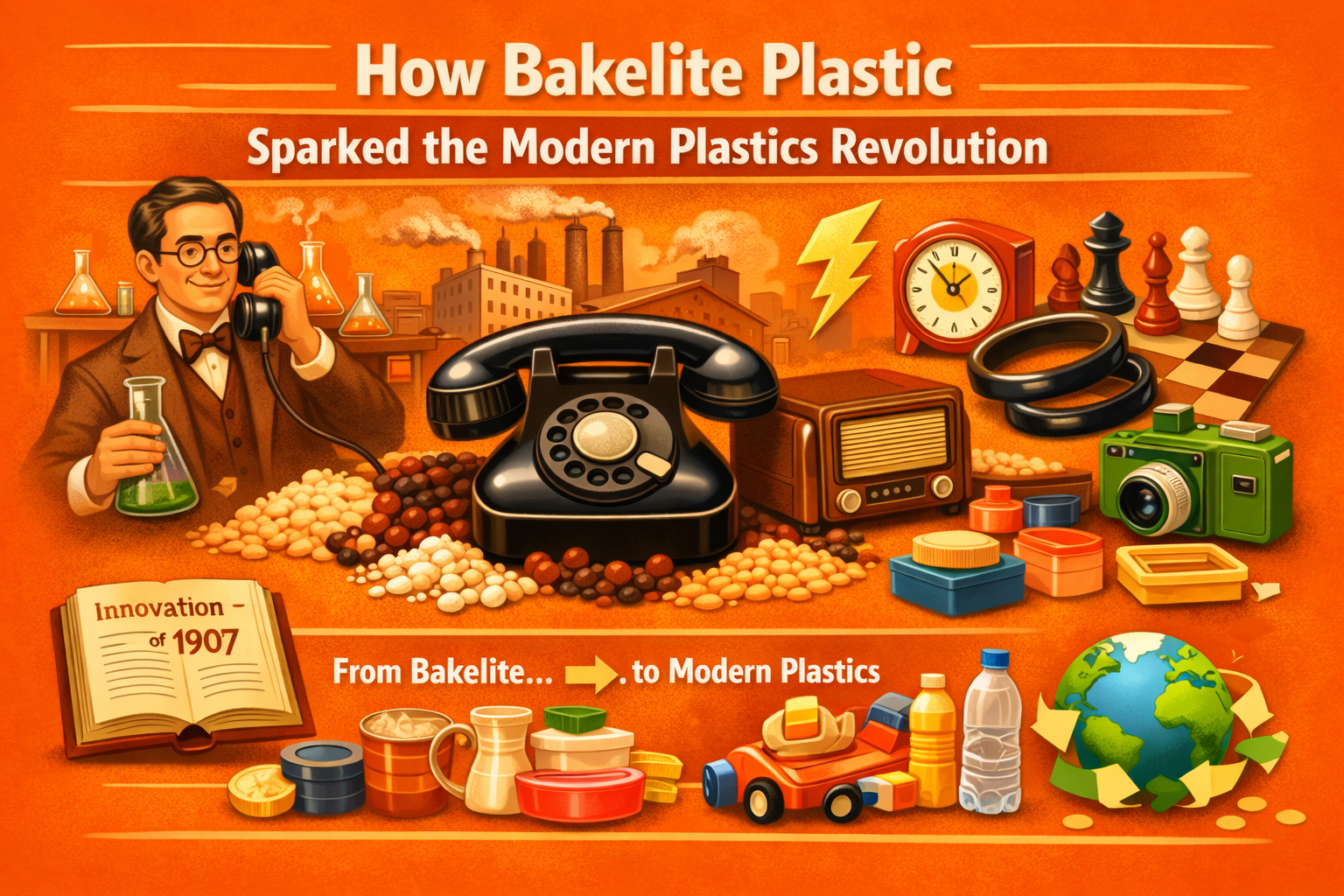
At the dawn of the 20th century, the world witnessed a transformational material: Bakelite plastic. As the first truly synthetic plastic, it broke away from natural resins and ushered in an era of man-made polymers. Patented in 1909 by Leo Baekeland, this phenol-formaldehyde resin could be molded under heat and pressure, then permanently hardened, laying the foundation for everything from consumer goods to electrical insulation.
1. The Birth of Bakelite
In 1907, Belgian-American chemist Leo Baekeland began experimenting with phenol and formaldehyde aiming to find a replacement for shellac. His efforts led to a hard, moldable plastic that resisted heat and electricity. He dubbed his creation “Bakelite” and secured a patent in December 1909 . By 1910, he founded General Bakelite Company in New Jersey, marking the birth of the synthetic plastics industry .
Bakelite was hailed as “the material of a thousand uses,” as it was molded into radio casings, telephone components, jewelry, kitchenware, pipe stems, and firearm handles. Its early prevalence set an unmistakable precedent—synthetic, customizable, heat-resistant materials could revolutionize production.
2. Chemical and Physical Properties
Bakelite is a thermosetting phenol-formaldehyde resin, meaning once set, it cannot melt again. Its rigid, cross-linked molecular structure results in:
- Exceptional thermal stability: it resists heat and retains its form under stress.
- Excellent electrical insulation, making it ideal for electrical applications.
- High hardness and dimensional stability: molded objects maintain shape with minimal finishing.
Materials data show a bakelite melting point around ~300°C but emphasize that it doesn’t melt—it decomposes. Other key properties include
- Density: ~1.3 g/cm³
- Young’s modulus: 10–14 GPa
- Compressive strength: 170–260 MPa
- Electrical resistivity: 1×10¹⁰ – 1×10¹² Ω·m
Bakelite, once cured, doesn’t soften with heat—making it durable yet non-recyclable in conventional ways.
3. Why It Was Revolutionary
Bakelite’s invention marked a paradigm shift:
- First synthetic plastic from purely synthetic components .
- Showed that heat-induced cross-linking could produce permanent materials suited to varied uses.
- Opened new possibilities in molding and mass production: interiors of phones and radios became accessible to everyday consumers.
- Set a model for plastics industry—leading to nylon, polyethylene, epoxy, and more.
It earned recognition as a National Historic Chemical Landmark for its role in launching the plastics age.
4. Industrial Uses and Molded Goods
Bakelite’s stability and moldability made it ubiquitous in manufacturing:
- Electronics: connectors, insulators, radio and telephone housings .
- Automotive: distributor caps, ignition components.
- Consumer goods: kitchen handles, billiard balls, chess pieces, piccolo whistles .
- Jewelry and accessories: bracelets, bangles, earrings—all praised for their heat-resistance and sheen .
- Industrial: phenolic plates, control panels, circuit boards (later supplanted) .
During WWI & WWII, Bakelite also adapted to airplanes and field radios .
5. Melting Point & Thermosetting Nature
As a thermoset, Bakelite has no true melting point. It undergoes decomposition at ~300 °c.. It doesn’t soften upon reheating, and any attempt causes charring. This irreversible curing is what makes it uniquely resilient.
6. Vintage Appeal and Collectibles
Today, Bakelite items are highly collectible. Characterized by their vintage aesthetic, warmth, and colorful hues—especially from Catalin, a type of cast phenolic resin—they’re sought after in retro jewelry and decorative arts
7. Limitations and Decline
Bakelite’s popularity waned mid-20th century as thermoplastics like polystyrene, PVC, and nylon emerged. Thermoplastics offered easy remelting, more flexibility, and cost efficiencies .
Still, Bakelite remains valuable where extreme heat resistance and electrical insulation are indispensable—like in aerospace and specialized instruments today.
8. Modern Relevance: Surya Masterbatches
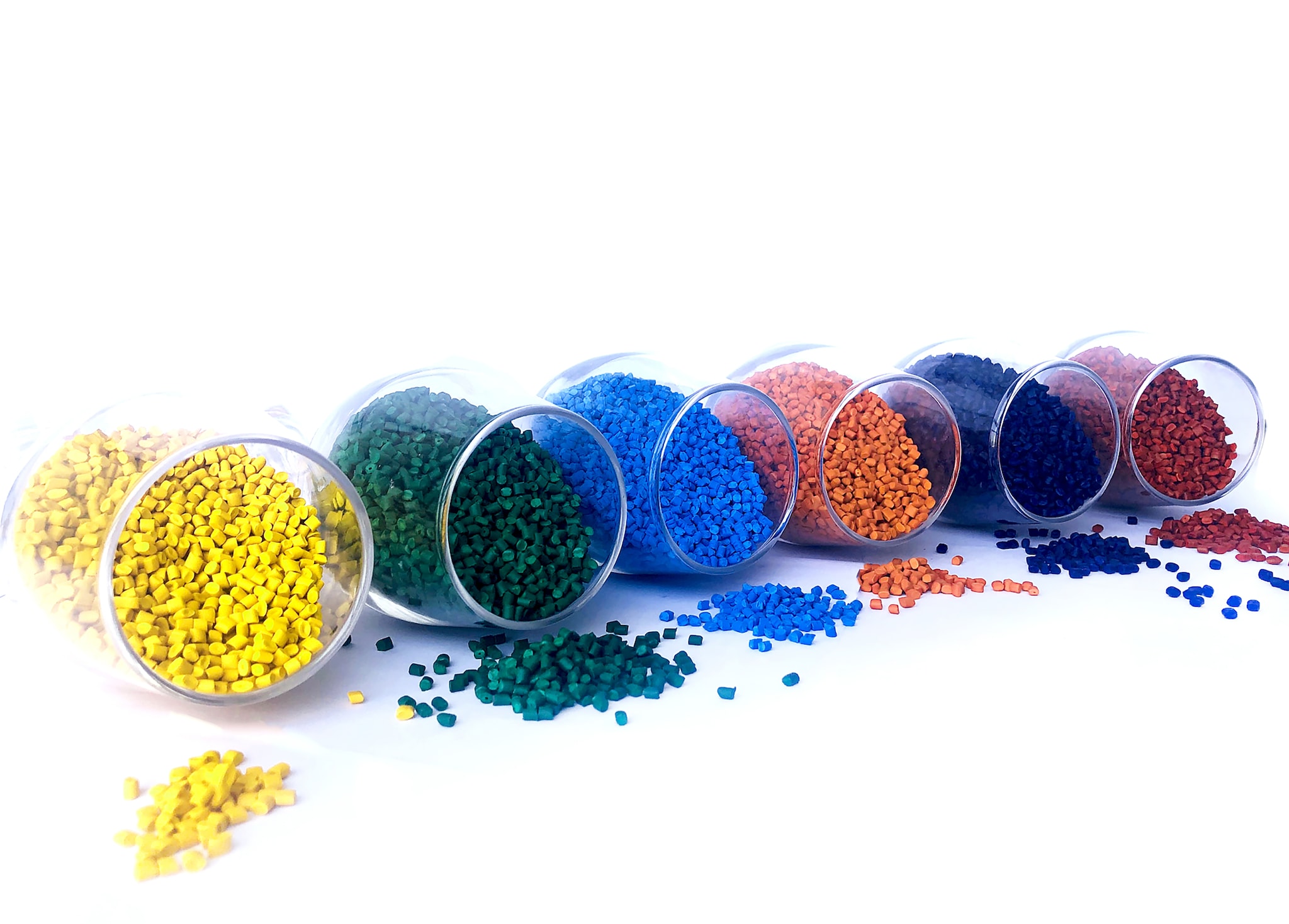
In a modern context, companies like Surya Masterbatches specialize in color and additive masterbatches—compounds added during plastic processing to impart specific traits.. Although Bakelite production has faded, masterbatches remain essential for plastic manufacturing.
Surya Masterbatches (P) Ltd.—established in 1986—supplies color and functional masterbatches for extrusion, injection, roto, and blow molding across industries like automotive, wire & cable, medical tubing, and more . The use of masterbatches ensures precise color, UV stability, flame retardancy, and impact resistance—conceptually mirroring Bakelite’s pioneering role in customizing plastic properties.
9. Environmental and Recycling Challenges
Like many thermosets, Bakelite cannot be remelted or reformed once cured—the cross-linked structure is stable but non-recyclable. Disposal requires incineration or purposeful reuse, underscoring environmental drawbacks compared to recyclable thermoplastics.
Modern masterbatches offer a more sustainable path: they allow recyclers to reformat plastics with added pigments or stabilizers, preserving function and reducing waste.
10. Legacy and Future Outlook
Bakelite stands as the cornerstone of synthetic polymers, forever shaping plastics development. It demonstrated control over molecular structure to create tailor-made materials—a concept that endures in today’s polymer science and masterbatch technology .
Its heritage informs current R&D in high-performance thermosets and polymer composites, while Surya Masterbatches illustrate the continuing evolution of customization in plastic manufacturing.
11. Technical Summary Table
| Property | Value/Comment |
| Composition | Phenol-formaldehyde resin |
| Melting Point | No true melting; decomposition ~300 °C |
| Electrical resistivity | 1×10¹⁰–1×10¹² Ω·m |
| Density | Approx. 1.2–1.4 g/cm³ |
| Young’s Modulus | 10–14 GPa |
| Compressive Strength | 170–260 MPa |
| Hardness | Brinell 20–40 |
12. Conclusion
Bakelite plastic marked the start of the plastics revolution—ushering a new era in material design by introducing synthetic, customizable polymers with unmatched chemical, thermal, and electrical properties. Despite its thermosetting limitations, it showcased humanity’s ability to shape and engineer materials tailored to specific needs.
Today, masterbatch technologies, exemplified by Surya Compounds & Masterbatches, fulfill Bakelite’s legacy—allowing a diverse range of plastics to be color-customized, performance-enhanced, and functionally engineered. Masterbatches deliver versatility long dreamed of since Bakelite’s inception.
From the vintage charm of Bakelite jewelry to advanced composites and responsive color plastics, this heritage continues to inspire innovation in the world of thermosets and masterbatch-enhanced materials.