

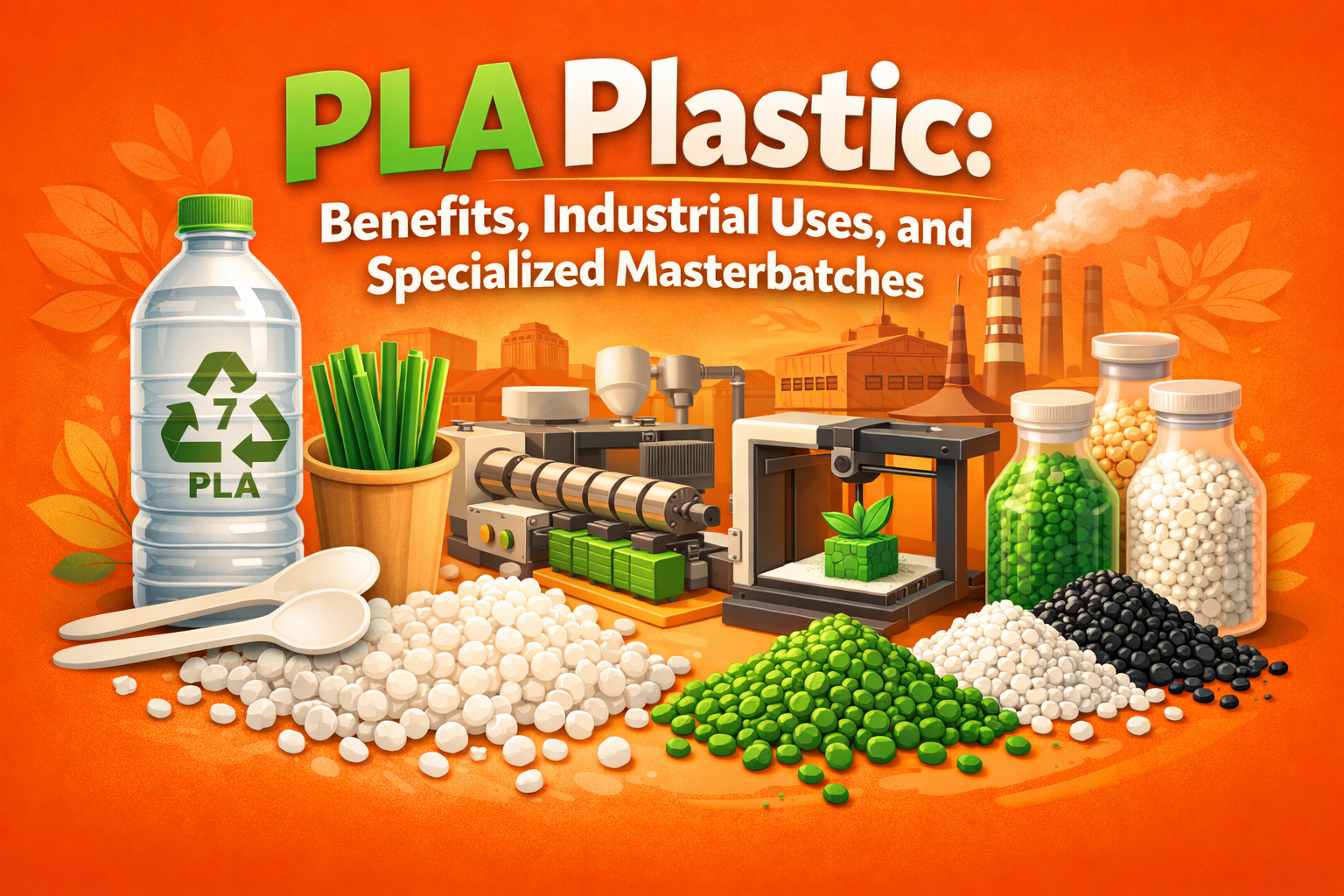
The sustainable revolution depends on PLA Plastic for its understanding of this material. The material science field developed Polylactic Acid (PLA) as its most important breakthrough because it unites industrial strength with environmental sustainability. PLA Plastic exists as a bioplastic that derives from sustainable materials, including corn starch, tapioca roots, and sugarcane. The transition of worldwide industries toward circular economy operations requires Surya compound & masterbatches to deliver essential additives, which will improve PLA’s inherent characteristics for meeting commercial performance requirements. PLA Plastic offers multiple essential PLA plastic benefits to users. The green movement adopted PLA because scientists first needed to understand its fundamental properties, which make it suitable for various Applications Of PLA Plastic:
Core Advantages and PLA Plastic Benefits
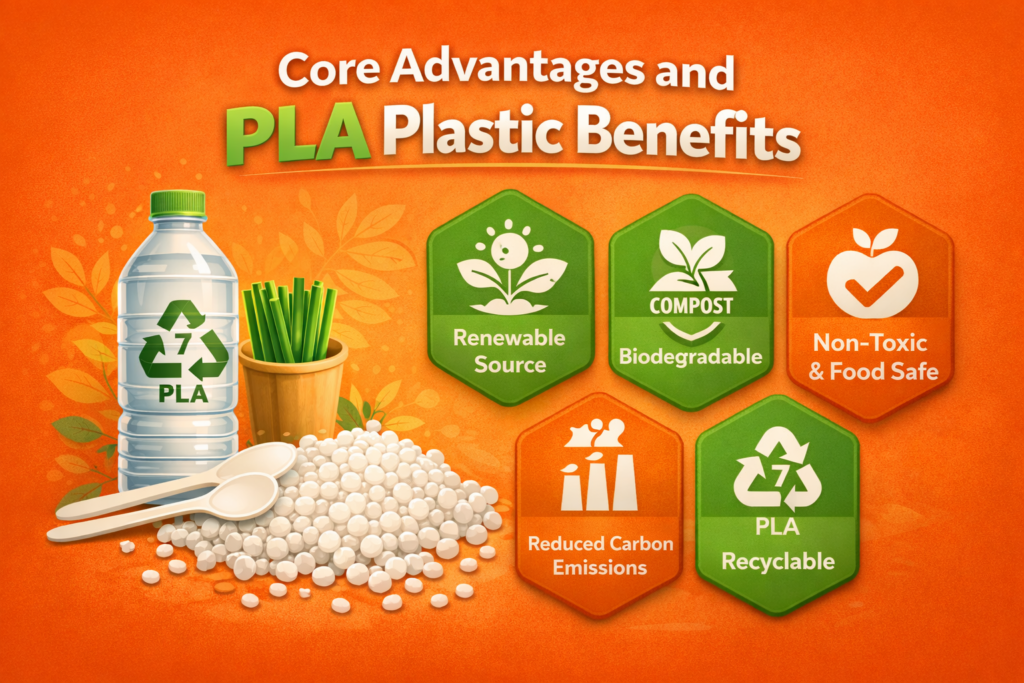
- Biodegradability: PLA decomposes into water and carbon dioxide when it undergoes industrial composting without producing any dangerous substances.
- Biocompatibility: The material shows biocompatibility because it carries GRAS status, which allows safe human body contact thus making it suitable for medical applications and food processing needs.
- Low Carbon Footprint: The manufacturing process of PLA requires less fossil fuel than the production of conventional plastics which includes PET and PS.
- Processing Efficiency: The material processing becomes easier because it has a lower melting point which enables multiple manufacturing methods, including 3D printing and thermoforming.
Applications Of PLA Plastic
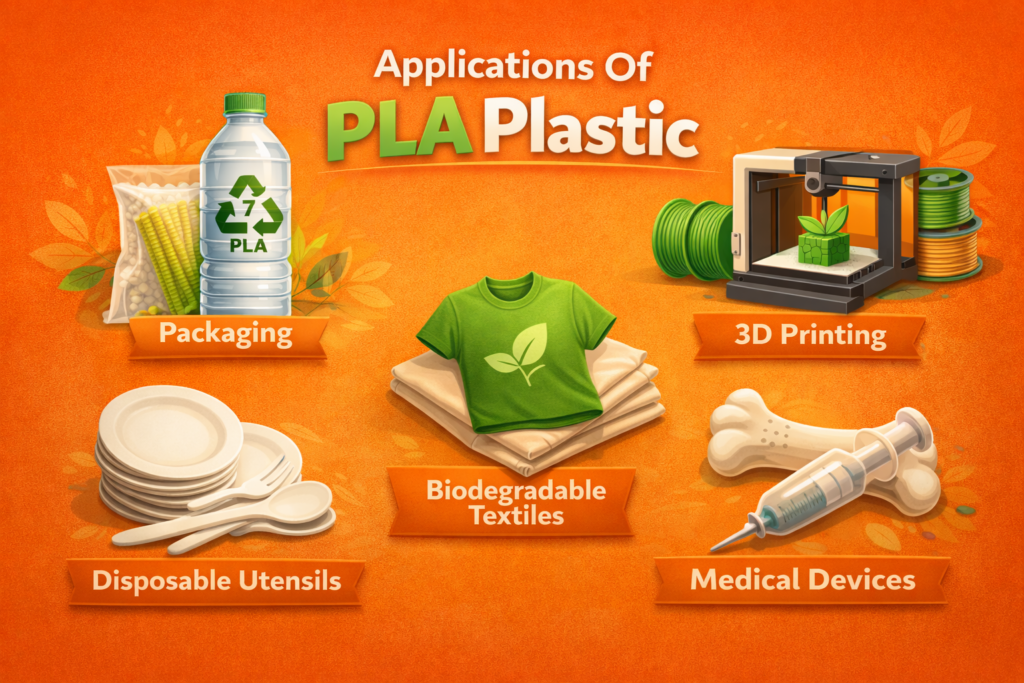
1. Food Packaging and Service
The food industry is perhaps the largest consumer of PLA Plastic. Because PLA is clear, rigid, and resistant to fats and oils, it serves as an excellent eco-friendly alternative to single-use plastics.
Common Uses:
- Disposable Cutlery: Spoons, forks, and knives that offer the same structural integrity as plastic but are compostable.
- Cups and Containers: The establishment provides Cups and Containers which include Clear cold-drink cups, salad bowls and deli containers.
- Clamshell Packaging: Clamshell Packaging serves as a common packaging solution that supermarkets use to protect fresh produce and baked goods.
- Beverage Solutions: Premium tea brands have started using PLA mesh instead of nylon or paper, which receives adhesive treatment for their tea bags.
2. The Medical and Biomedical Sector
PLA’s biocompatibility is its “superpower” in the medical field. Since the body can safely absorb lactic acid (the building block of PLA), it is used for internal applications that traditionally required a second surgery for removal.
Key Medical Applications:
- Surgical Sutures: Dissolvable stitches that disappear as the wound heals.
- Drug Delivery: The body can receive medication through PLA microspheres which scientists designed to deliver drugs at specific times.
- Orthopedic Fixation: The healing process of bone fragments requires screws and pins and plates which function as bone stabilizers until they disappear through natural bone replacement.
- Tissue Engineering: The field of tissue engineering makes use of scaffolds which serve as short-term frameworks for cell development during skin and cartilage regeneration processes.
3. 3D Printing and Prototyping
The world of “Additive Manufacturing” uses PLA Plastic as its primary material which serves both entry-level users and experienced professionals. It is the most widely used filament because it does not require a heated bed and produces very little odor or warp during printing.
The product stands out because it delivers precise details through its printing process. Surya compound & masterbatches specialized additives in Surya compound & masterbatches enable PLA to produce various color options and texture effects and metallic appearance when used together. The design process benefits from Rapid Prototyping because it enables designers to create multiple product design versions through affordable printing operations which produce minimal environmental damage.
4. Textile and Apparel Industry
The fashion industry is increasingly looking at “corn fiber” as a sustainable alternative to polyester. PLA can be spun into fibers that are woven or knitted into fabrics.
Applications Of PLA Plastic in Textiles:
- Activewear: PLA fibers have excellent moisture-wicking properties and are naturally flame-retardant.
- Non-woven Fabrics: Non-woven Fabrics serve as the material basis for hygiene products which include diapers and feminine care items and wet wipes.
- Upholstery: The material serves home furniture needs because it provides both comfort and long-lasting performance.]
5. Agriculture and Horticulture
PLA helps farmers reduce “plastic mulch” waste, which is a major source of soil pollution.
- Mulch Films: PLA films enable farmers to discard plastic sheets through soil plowing at the end of each growing season because they will break down naturally.
- Plant Pots: Seedling starters that can be buried directly in the ground, preventing root shock.
- Binding Twine: The string used for crop tying will decompose when it remains in the agricultural field.
Industrial Enhancement via Surya compound & masterbatches
The addition of Surya compound & masterbatches to PLA leads to enhanced performance for polylactic acid uses in industry because these modifications solve the existing limitations of the material. Surya compounds & masterbatches serve as a vital component in this process. The company helps manufacturers through its high-performance masterbatches, which enable them to achieve two main objectives:
- Impact Modification: The research investigates Impact Modification techniques to strengthen PLA materials for industrial applications that require high performance.
- Process Stabilization: The system maintains plastic flow stability, which enables machine operation while minimizing production waste to its lowest possible amount.
- Specialty Functional Additives: The additives introduce anti-static and anti-microbial properties to the materials.
Technical Composition and Polylactic Acid Uses in Industry
Polylactic Acid (PLA) is produced through a controlled polymerization process that follows a specific sequence of chemical reactions. Its repeating unit is commonly expressed by the chemical formula (C₃H₄O₂)ₙ, which defines the polymer’s structural backbone.
PLA is typically manufactured using the ring-opening polymerization of lactide:
This molecular structure plays a critical role in PLA’s biodegradability. The ester bonds within the polymer chain can be broken down by microorganisms during composting, making PLA an environmentally responsible material. Due to this property, PLA is widely adopted across various industrial applications, including packaging, medical products, and 3D printing.
The Future of PLA in Industry
The world needs PLA Plastic because single-use plastics face increasing international restrictions, which drive this transition. The ongoing technological progress has led to the use of polylactic acid in industry across three main fields, which include electronic device enclosures, automotive interior elements, and residential construction through three-dimensional printing.
Surya compound & masterbatches functions as an expert supplier, which makes PLA suitable to replace conventional plastics throughout every human life sector. The world is progressing toward a period that will see all our daily items create personal effects but remain environmentally friendly.
Summary Table: PLA vs. Traditional Plastic (PET)
|
Feature |
PLA (Polylactic Acid) |
PET (Polyethylene Terephthalate) |
|
Source |
Renewable (Plants) | Non-renewable (Oil/Gas) |
|
Biodegradability |
Compostable | Non-biodegradable |
| Carbon Footprint | Low |
High |
| Heat Resistance | Moderate (Improved with Masterbatches) |
High |
| Primary Use | Eco-packaging, Medical, 3D Printing |
Bottles, Synthetic Fibers |