

Introduction
Corrosion is one of the most significant challenges faced by industries worldwide. From pipelines and storage tanks to chemical handling equipment, the gradual deterioration of materials due to chemical reactions can cause costly damage and operational failures. Traditionally, metals were used in many corrosive environments, but they often require expensive coatings or maintenance to resist degradation. This is where corrosion-resistant plastic materials step in as a superior alternative.
Plastics not only provide resistance to moisture, chemicals, and environmental exposure, but they are also lightweight, cost-effective, and easier to process. With the right additives and formulations, they offer long-term solutions across industries. In this guide, we will explore the types of corrosion, a detailed list of corrosion-resistant plastic, their applications, and the role of companies like Surya Compound & Masterbatches in developing advanced plastic materials for demanding environments.
1. Understanding Corrosion
Before diving into plastics, it’s important to understand what corrosion is and how it occurs.
1.1 What is Corrosion?
Corrosion is the gradual destruction or deterioration of materials—especially metals—caused by chemical, electrochemical, or environmental interactions. It often results in weakening, pitting, or cracking, ultimately reducing the life span of structures and equipment.
1.2 Types of Corrosion
The types of corrosion that commonly affect industrial applications include:
- Uniform Corrosion: Affects the surface evenly and leads to gradual thinning.
- Pitting Corrosion: Localized holes or pits form on the material’s surface.
- Crevice Corrosion: Occurs in confined spaces where oxygen levels differ.
- Galvanic Corrosion: Arises when two dissimilar metals are in contact.
- Stress Corrosion Cracking: Caused by the combined effect of tensile stress and corrosive environments.
- Chemical Attack: Direct reaction with aggressive chemicals like acids, alkalis, or solvents.
Plastics, unlike metals, are immune to galvanic corrosion and many forms of chemical attack, making them highly attractive in corrosive environments.
2. Why Choose Corrosion Resistant Plastic?
Corrosion resistant plastic materials offer multiple benefits compared to traditional materials:
- Chemical Resistance: They withstand acids, alkalis, and solvents.
- Lightweight: Easier to transport and install compared to metals.
- Durability: Longer lifespan in harsh conditions.
- Cost-Effective: Require minimal maintenance.
- Design Flexibility: Can be molded into complex shapes for custom applications.
- Safety: Non-toxic grades are available for food and pharmaceutical uses.
These properties make plastics a sustainable solution for industries facing corrosion challenges.
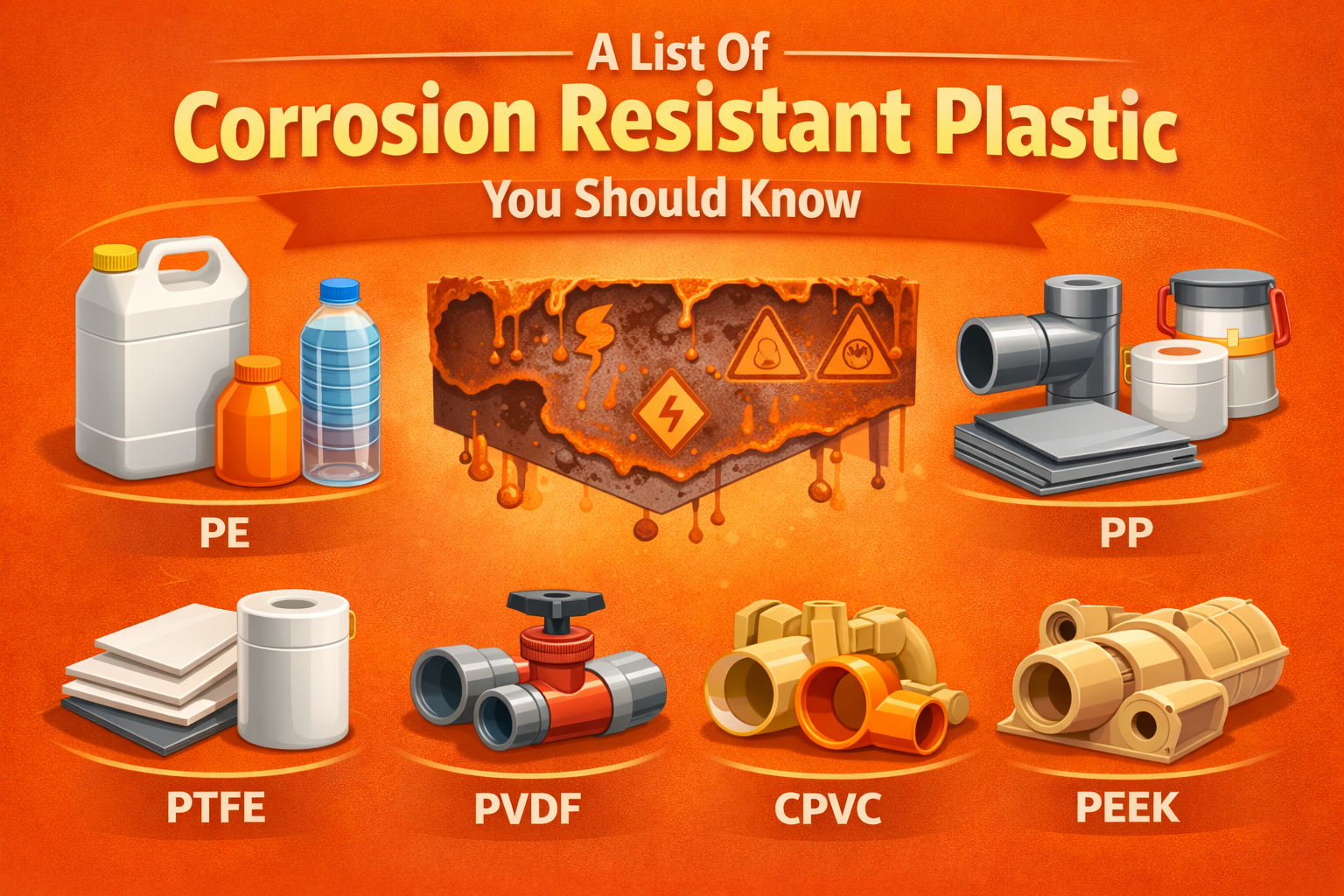
3. List of Corrosion Resistant Plastic Materials
Here’s a comprehensive list of widely used corrosion resistant plastic types and their unique properties:
3.1 Polyethylene (PE)
- Resistant to most acids, alkalis, and solvents.
- Used in tanks, piping systems, and packaging for chemicals.
- Different grades like HDPE and LLDPE offer specific strengths.
3.2 Polypropylene (PP)
- Excellent resistance to chemical attack, especially alkalis.
- Lightweight and easy to mold.
- Common in lab equipment, automotive components, and chemical storage.
3.3 Polyvinylidene Fluoride (PVDF)
- Highly resistant to acids and halogens.
- Retains strength at high temperatures.
- Used in chemical processing, water treatment, and electronics.
3.4 Polyvinyl Chloride (PVC)
- Resistant to acids, salts, and alkalis.
- Cost-effective and widely used.
- Common in pipes, fittings, and chemical tanks.
3.5 Polytetrafluoroethylene (PTFE)
- Exceptional resistance to nearly all chemicals.
- Low friction surface, making it ideal for seals and gaskets.
- Performs well at high temperatures.
3.6 Polyetheretherketone (PEEK)
- High strength and resistance to organic and inorganic chemicals.
- Withstands high thermal stress.
- Used in aerospace, oil & gas, and medical implants.
3.7 Acrylic (PMMA)
- Resistant to dilute acids and bases.
- Lightweight and transparent.
- Common in glazing, display systems, and protective coatings.
3.8 Polycarbonate (PC)
- Good resistance to dilute acids and oils.
- Strong impact resistance and clarity.
- Used in protective covers, equipment housings, and industrial components.
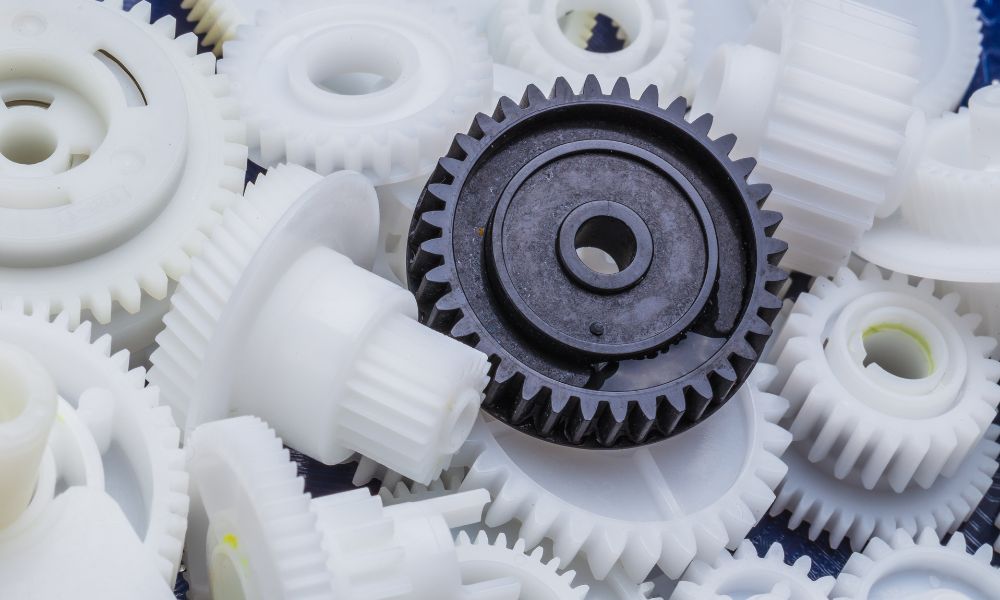
3.9 Polyamide (Nylon)
- Resistant to oils and many organic solvents.
- Strong mechanical properties with wear resistance.
- Applied in gears, bearings, and machine parts.
3.10 UHMW Polyethylene (UHMWPE)
- Extremely tough and abrasion-resistant.
- Resistant to chemicals and moisture.
- Applied in mining, medical devices, and conveyor systems.
These corrosion resistant plastics are carefully selected depending on the industry’s needs, the type of chemicals involved, and operational conditions.
4. Applications of Corrosion-Resistant Plastics
The applications of corrosion-resistant plastics span across multiple industries, thanks to their strength and adaptability.
4.1 Chemical Processing
- Storage tanks for acids and alkalis
- Pipes and fittings for chemical transport
- Gaskets, seals, and valves resistant to harsh chemicals
4.2 Water & Wastewater Treatment
- Piping systems resistant to chlorine and other disinfectants
- Linings for tanks and basins
- Components in desalination plants
4.3 Food & Beverage Industry
- Food-grade plastics for hygienic storage and processing
- Conveyor belts, cutting boards, and protective barriers
- Packaging resistant to moisture and microbial growth
4.4 Healthcare & Pharmaceuticals
- Medical containers and drug delivery systems
- Tubing and lab equipment resistant to sterilization chemicals
- Implants made from biocompatible plastics like PEEK and UHMWPE
4.5 Construction & Infrastructure
- Pipes for drainage and sewage
- Roofing membranes and protective linings
- Geomembranes for landfills and water reservoirs
4.6 Automotive & Aerospace
- Fuel systems resistant to chemical degradation
- Lightweight components to reduce emissions
- Protective coatings and housings
4.7 Agriculture
- Irrigation systems exposed to fertilizers and pesticides
- Greenhouse films and coverings
- Storage bins and containers
These applications demonstrate how corrosion resistant plastic has become integral in industries that demand safety, durability, and performance.
5. The Role of Masterbatches in Enhancing Corrosion Resistant Plastics
While plastics naturally offer strong corrosion resistance, additives in the form of masterbatches further enhance their properties.
Functions of Masterbatches:
- UV Resistance: Prevents degradation in outdoor applications.
- Antioxidants: Improve thermal and chemical stability.
- Colorants: Provide consistency and durability under exposure.
- Performance Additives: Enhance mechanical strength, slip properties, and chemical resistance.
Surya Compound & Masterbatches specializes in designing tailored masterbatch solutions that elevate the performance of corrosion-resistant plastics, ensuring they meet industry-specific requirements.
6. Surya Compound & Masterbatches – Innovating Corrosion Resistant Solutions
In the competitive plastics industry, Surya Compound & Masterbatches stands out by developing advanced masterbatches and compounds that improve the durability and chemical stability of polymers. Their expertise ensures that plastics used in aggressive environments not only resist corrosion but also deliver reliability and safety over time.
By integrating R&D with industry experience, they create solutions for applications of corrosion-resistant plastics in packaging, construction, automotive, and chemical processing industries. This focus on quality and performance makes them a trusted partner for industries relying on plastic innovations.
7. Future of Corrosion Resistant Plastics
With industries moving toward sustainability and high-performance materials, the future of corrosion resistant plastics looks promising. Trends include:
- Bio-based Polymers: Development of eco-friendly corrosion-resistant plastics.
- Advanced Masterbatches: Improved additive technology for higher durability.
- Smart Plastics: Materials that can self-heal or indicate early corrosion.
- Circular Economy: Greater recycling and reuse of corrosion-resistant plastics.
These innovations will further expand the scope of plastic applications while addressing environmental concerns.
Conclusion
Corrosion is a universal challenge, but with the right materials, industries can achieve efficiency, safety, and longevity. Corrosion resistant plastics such as polyethylene, polypropylene, PTFE, PVDF, and others provide effective alternatives to metals in harsh environments. Their unique properties, combined with specialized formulations, allow them to thrive in sectors ranging from chemical processing and construction to healthcare and agriculture.
With the support of innovators like Surya Compound & Masterbatches, industries benefit from customized solutions that enhance corrosion resistance, durability, and sustainability. As technology advances, plastics will continue to redefine what is possible, proving that they are not just alternatives to metals but superior choices in many critical applications.