

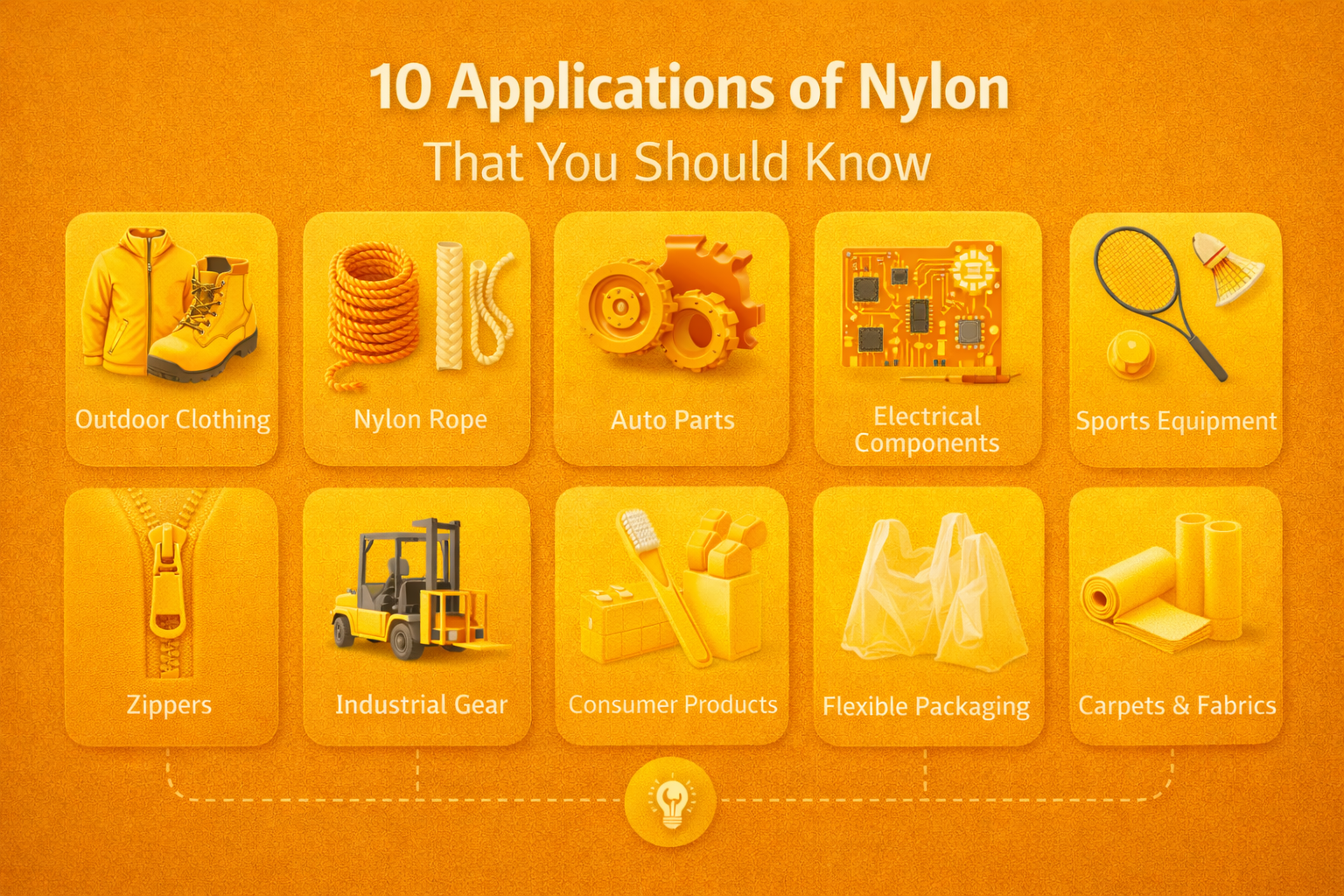
It resists damage over time – that helps explain why so many fields rely on it. Found everywhere from homes to factories, this strong material withstands stress. Stretching without breaking gives it an edge where flexibility matters. Tough by nature, it shows up in gear meant to last. Because it handles strain well, makers choose it for tools, threads, and parts alike.
Nylon has several qualities that make it suitable for a variety of purposes. Here we outline the key uses of nylon—ten in total—and the reasons why it has been chosen for such a diverse range of applications of nylon. It is a material that is worthy of attention, and one of the reasons is its properties.
Nylon Characteristics Explained
What keeps nylon popular? Strength stands out right away. It handles daily punishment without giving up easily. Because it lasts, people pick it for tough jobs. When things get rough, this stuff holds together.
- Falling tough under pressure, this stuff handles force well – about 1400 megapascals worth when pulled apart. Strength like that doesn’t quit easily.
- Fine layers stand up well when rubbed hard. They last longer under rough contact.
- Tough yet lightweight.
- Fight off weak acids without trouble; these hold up well against many common chemical exposures. Their strength shows when facing salts and basic solutions, too. Resisting damage from various lab materials comes naturally to them.
- Frost forms slowly on surfaces that resist heat. These materials hold their structure when things get hot
- Flexibility and elasticity
- Low friction coefficient
1. Textile and Apparel Industry
A sudden shift came when nylon arrived on shelves in the 1940s. Despite being new, garments made from it spread fast across markets. Instead of waiting years to catch on, its adoption happened almost overnight.
Using Nylon in Fabric Making
Clothing, including items such as sportswear, stockings,s and activewear.
- Blended fabrics to improve durability
- Carpets and upholstery
Why Nylon Is Ideal
They are also very lightweight and breathable.
- Fabric is mostly cotton, mixed with a bit of polyester for strength. A touch less than one fifth of it resists wrinkles, while the rest keeps softness close to skin.
- Firm when pulled, holds shape after washing
- This thing holds up when most others would quit, surviving wash after wash without wearing out. Toughness like this doesn’t come along every day.
- Fibres spun from nylon show up everywhere in textiles because they bend easily yet resist pulling apart.
2. Automotive Components
The automotive industry has a significant dependence on nylon. This is for components which are located both under the bonnet and inside the vehicle.
Common Automotive Nylon Products
- Engine covers
- Air intake manifolds
- Fuel system components
- Gears and bearings
Key Advantages
- Heat resistance
- High mechanical strength is combined with good corrosion resistance.
- The use of lighter materials has greatly aided in achieving higher fuel efficiency through the reduction in the vehicle’s weight.
The use of nylon applications,as a replacement for metal, results in a lighter overall weight of the vehicle. This also improves the car’s performance.
3. Electrical and Electronics Industry
Nylon’s traits fit well when building parts for electronics. Things like wire coverings come to mind. What matters is how it handles heat and wear. Still, its role shows up most where safety and durability line up.
Typical Nylon Applications
- Cable ties
- Wire insulation
- Electrical connectors
- Switch housings
Why nylon is preferred
- Excellent electrical insulation
- Some of these materials come made to resist fire. Flame protection is an option with certain versions. You can get them built to slow flames down. Fire-resistant types exist within this group. Certain kinds are designed to withstand burning.
- Few things last like they do.
Nylon provides important properties which make it suitable for use in electronic products which have to be reliable and safe.
4. Packaging Industry
The textile industry which produces nylon finds numerous benefits in the versatile material.
Uses of Nylon in Packaging
- Food packaging films
- Vacuum-sealed packaging
- Multilayer packaging materials
Performance Benefits
This packaging material has good properties to keep moisture and air out.
- Strong and puncture-resistant
- Maintains product freshness
In the food and pharmaceutical industries, nylon is frequently used for packaging purposes.
5. Industrial Machinery Parts
Polyamides are used in industrial contexts that demand low friction and are resistant to wear.
Common Industrial Nylon Products
- Bushings
- Rollers
- Conveyor components
- Wear protective headgear.
Why Industries Choose Nylon
- Self-lubricating properties
- Their construction included a rubber pad to reduce engine noise and vibrations.
- High resistance to wear
The implementation of these features helps to increase the lifespan of equipment and its efficiency.
6. Everyday Products People Use at Home
Fashion items often feature nylon products because it holds up well over time. What makes this fabric stand out? Its strength meets everyday demands without wearing down fast.
Common Uses of Nylon
- Toothbrush bristles
- Kitchen utensils
- Storage containers
- Zippers and fasteners
Benefits for Consumers
- Lightweight and strong
- Because of how they behave, shaping them into intricate forms takes little effort.
- Fragile? Not these. They shrug off cracks when hit hard.
Fresh looks and better performance come through in everyday items because of nylon. What stands out now is how well things work alongside how they appear, all thanks to this material. Not long ago, such upgrades seemed distant; today they’re common. Design gains strength without losing style. Function follows form more closely than before, simply because nylon changed the game.
7. Construction and Infrastructure
The construction sector has made significant use of nylon.
Nylon Applications in Construction
- Cable ties and fasteners
- Pipe fittings
- Insulation supports
Why Nylon Works Well
- This durable fabric is resistant to chemicals and water.
- The equipment functions normally over a wide range of temperatures.
- These tags are suitable for use outdoors, as they are UV-stabilized and also water-resistant.
- Its long-lasting properties make nylon a suitable choice for construction and building uses.
8. Medical and Healthcare Applications
Nylon is used by the healthcare industry in making disposable and durable medical products.
Medical Uses of Nylon
- Surgical sutures
- Catheters
- Medical tubing
Key Advantages
- This particular ceramic has high biocompatibility in several grades.
- High strength and flexibility were achievable due to the 90 degree orientation of the carbon fibers.
- Sterilization compatibility
- Its resistance to fatigue and wear enables nylon to be used in various high-risk health care settings.
9. Sports and Leisure Equipment
Frequently found in athletic gear, nylon shows up across outdoor items, too.
Common Nylon Applications
- Ropes and nets
- Fishing lines
- Sportswear and accessories
Performance Benefits
- Firmness in these strands stops them from snapping easily under pull.
- Resisting wear quite well, it also holds up against damp conditions.
- Built light, these tools fit comfortably in your hand thanks to their shape.
Few materials match nylon when strength matters in sports gear. What stands out is how well it handles stress without breaking. Its toughness comes from tight molecular chains built during manufacturing. Abrasion resistance gives it an edge over alternatives. Moisture hardly affects its shape or function. Longevity under heavy use makes manufacturers favor it repeatedly. Lightweight adds appeal without sacrificing durability. Performance stays consistent through extreme conditions.
10. Engineering Plastics and Technical Applications
Advanced engineering relies heavily on nylon as a key material used.
- Technical Nylon Products
- Precision gears
- Structural components
- Mechanical housings
Why Engineers Prefer Nylon
- Dimensional stability
- High load-bearing capacity
- Versatility through compounding and modification
Nylon can be modified by adding special ingredients and strengthening it with reinforcements to suit a variety of industrial needs.
Nylon Remains Widely Used Across Many Fields
What makes nylon so useful comes down to how it behaves. By changing its mix, people give nylon new traits one at a time.
- Improved strength
- Heat resistance
- Flame retardancy
- Impact resistance
Firm yet flexible, nylon adapts when demands shift across fields needing tougher substances. Though synthetic, its usefulness holds up under new pressures. Fields replace older fabrics with it where durability matters most.
Environmental Impact of Nylon
Right now, progress focuses mainly on these areas:
- Improved recyclability
- Sustainable nylon variants
- Reduced environmental impact
Conclusion
From high fashion garments to outdoor equipment nylon is a versatile material that impacts many aspects of our contemporary way of life. Nylon is a versatile material whose applications range from the manufacture of textiles and car parts through to medical equipment and machinery used in industry. One of the most valuable polymers currently in use is this material due to its strength, resistance to wear, durability and flexibility.
High-performance materials are often required by industries in a consistent quality and adaptable format. Nylon consistently meets these requirements. With advanced compounding and material technology expertise, Surya compound & masterbatches delivers innovative solutions for nylon materials which meet ever-evolving industrial needs and manufacturing processes.
